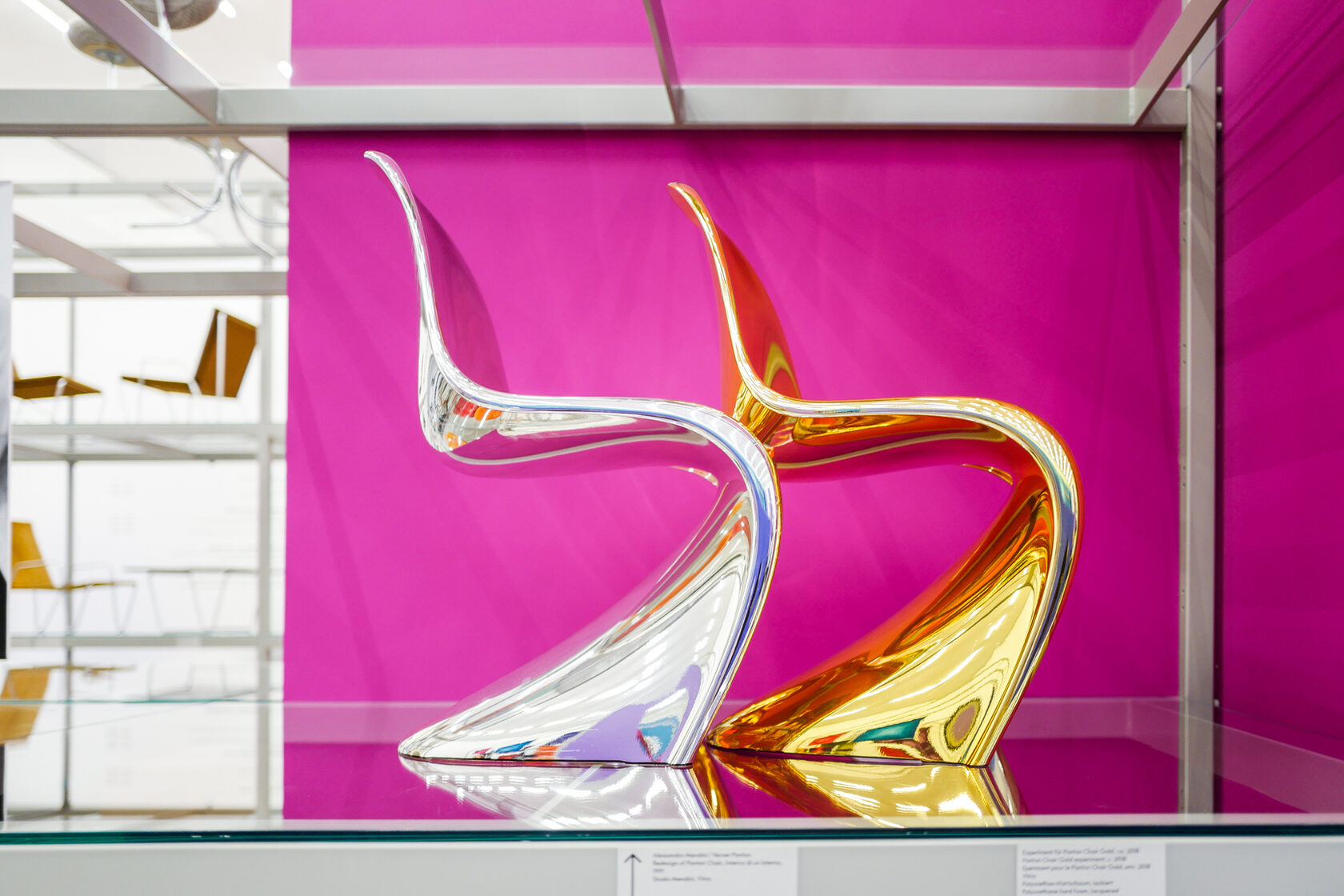
The Vitra Design Museum honours the centenary of Verner Panton — the enfant terrible of Danish minimalist designers who transformed the use of industrial materials and fundamentally redefined the role of furniture within interior space. Curated by Susanne Graner and Nina Steinmüller, the retrospective Verner Panton: Form, Colour, Space, open since 23 May, traces the career of one of the most influential designers of the 20th century.
The exhibition follows the arc of Panton's career, from his early experiments with interiors to his late works of the 1980s and 1990s. Borrowing from the Vitra Design Museum archive, which stores more than 20,000 drawings and sketches, the retrospective places Panton’s iconic works alongside his unrealised projects. Seen in this context, the unfinished projects point to a broader ambition at the heart of his work: to encourage people to live more imaginatively and with greater openness to experimentation.
“Most people spend their lives in dreary, grey-beige conformity, mortally afraid of using colours. By experimenting with lighting, colours, textiles and furniture and utilising the latest technologies, I try to show new ways to encourage people to use their fantasy and make their surroundings more exciting.'”
Panton’s career began in the early 1950s in the studio of Arne Jacobsen, one of the central figures of Danish modernism. Jacobsen had already begun to expand the boundaries of the Danish design tradition through experiments with new industrial materials and production methods. While preserving the Scandinavian emphasis on function and formal restraint, he brought Danish design closer to the language of international modernism. Panton inherited this transitional moment but pushed it much further. Moving beyond the muted tones and craft-oriented simplicity associated with Scandinavian interiors, he found his language in synthetic materials, saturated colour, and immersive spatial environments.
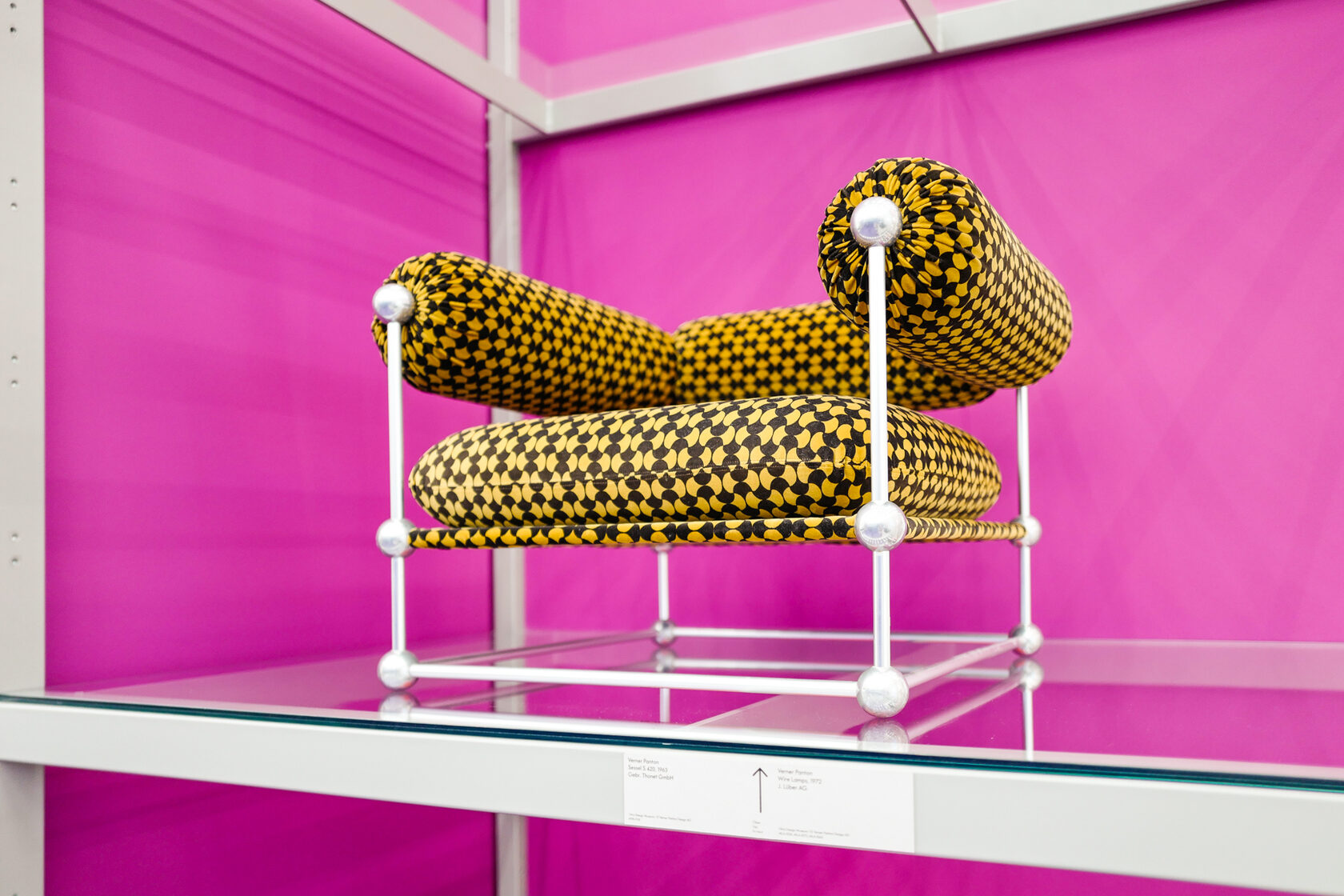
Plastic is perhaps the material most closely associated with Verner Panton’s work. This perception owes much to the Panton Chair, the first one-piece cantilevered plastic chair developed with the Swiss furniture company Vitra and launched in 1967. However, for Panton, plastic was less an end in itself than a means of creating continuous sculptural forms and saturated colours, to which he assigned a central role in the perception of space.
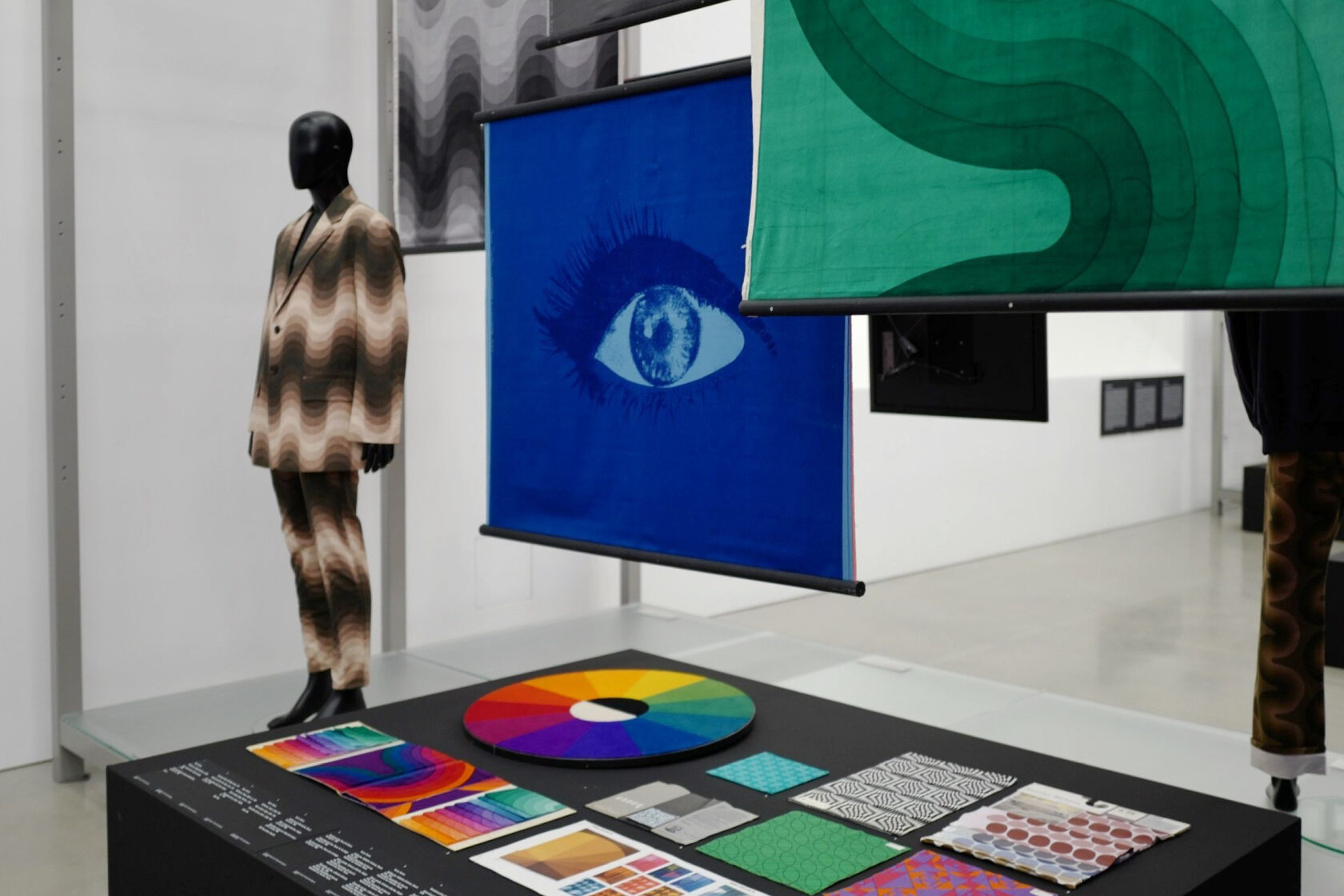
As the designer wrote in Verner Panton: Notes on Colour: “Choosing colours should not be a gamble. It should be a conscious decision. Colours have a meaning and a function.”
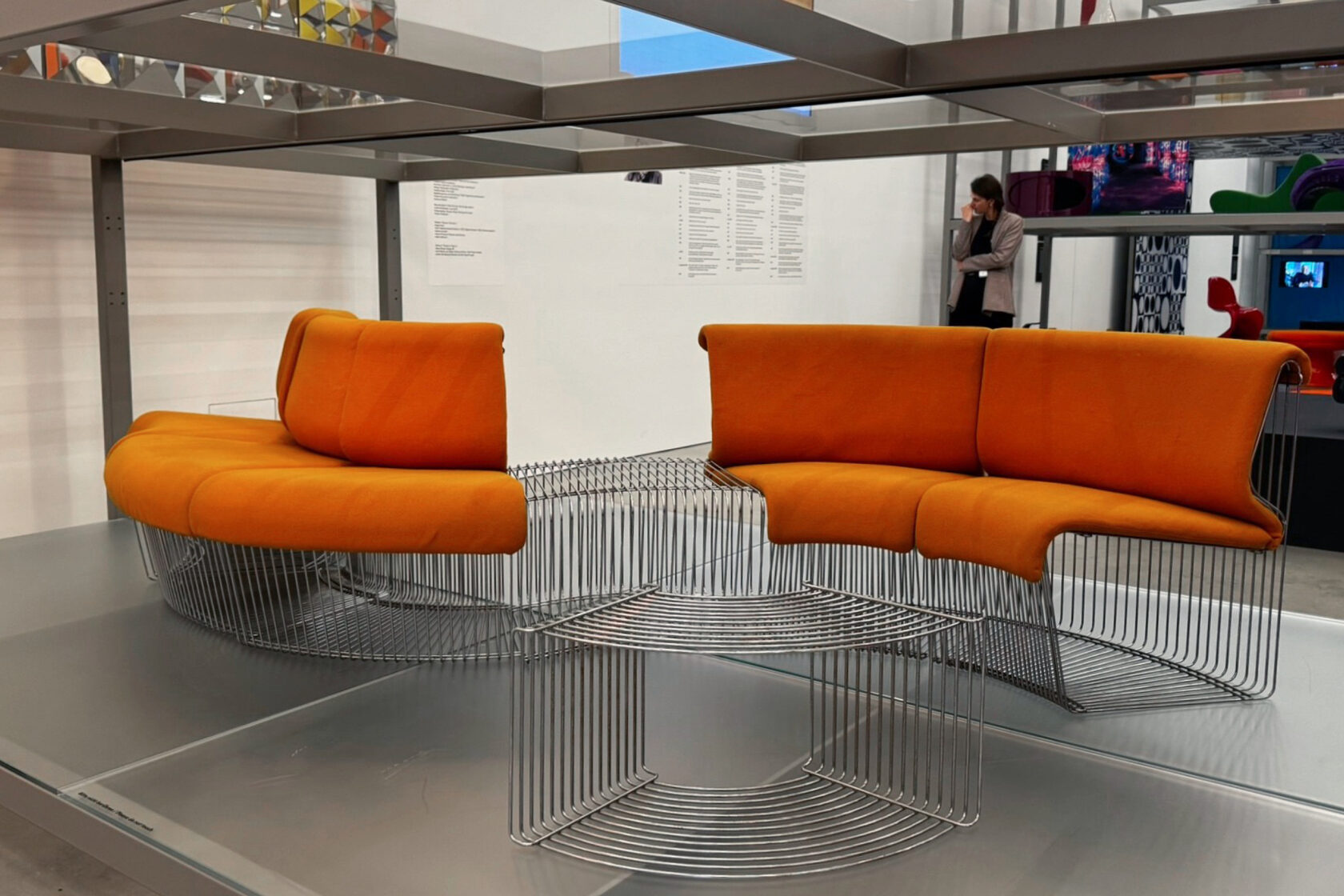
This idea of a conscious engagement with the environment extended beyond colour and informed the way Panton understood the role of furniture itself. He rarely treated objects as fixed or complete entities, developing instead systems in which space could evolve together with its users. In the Studioline sofa system, designed in 1961 for the Danish furniture company France & Søn, a sofa was broken down into elements of different sizes that could be rearranged into new compositions. A decade later, Panton returned to modular thinking with the Pantonova system, created for the Varna restaurant in Aarhus. Made from curved steel-wire sections, it could stretch, turn, close in on itself, or break apart, so that the same system could organise both smaller groups and larger shared spaces
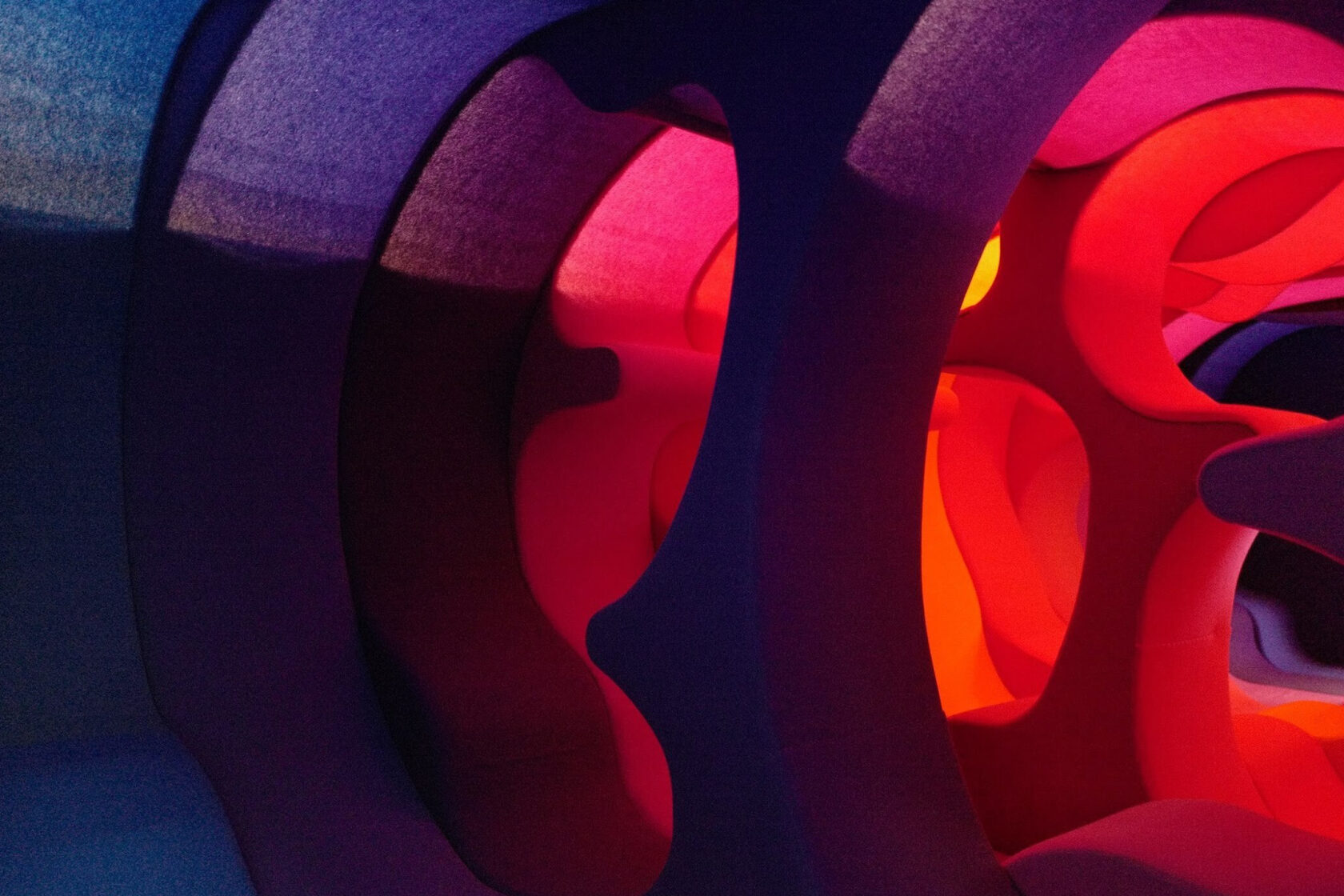
But no object in Panton's work makes this ambition more tangible than the Living Tower, where Panton pushed this idea even further, replacing the conventional sofa with a vertical multi-level structure where people could sit and interact in very different ways. Living Tower was originally developed for Bayer, which had invited Panton to demonstrate the possibilities of new synthetic materials in domestic interiors through its Visiona exhibitions. This context gave Panton the opportunity to move beyond individual objects and work with space as a complete environment. This approach was fully realised in Visiona II, where Panton dissolved conventional room divisions with a landscape of soft forms and colour-saturated surfaces that became known as Fantasy Landscape, recreated within the exhibition as an immersive reconstruction of one of his most ambitious spatial concepts.
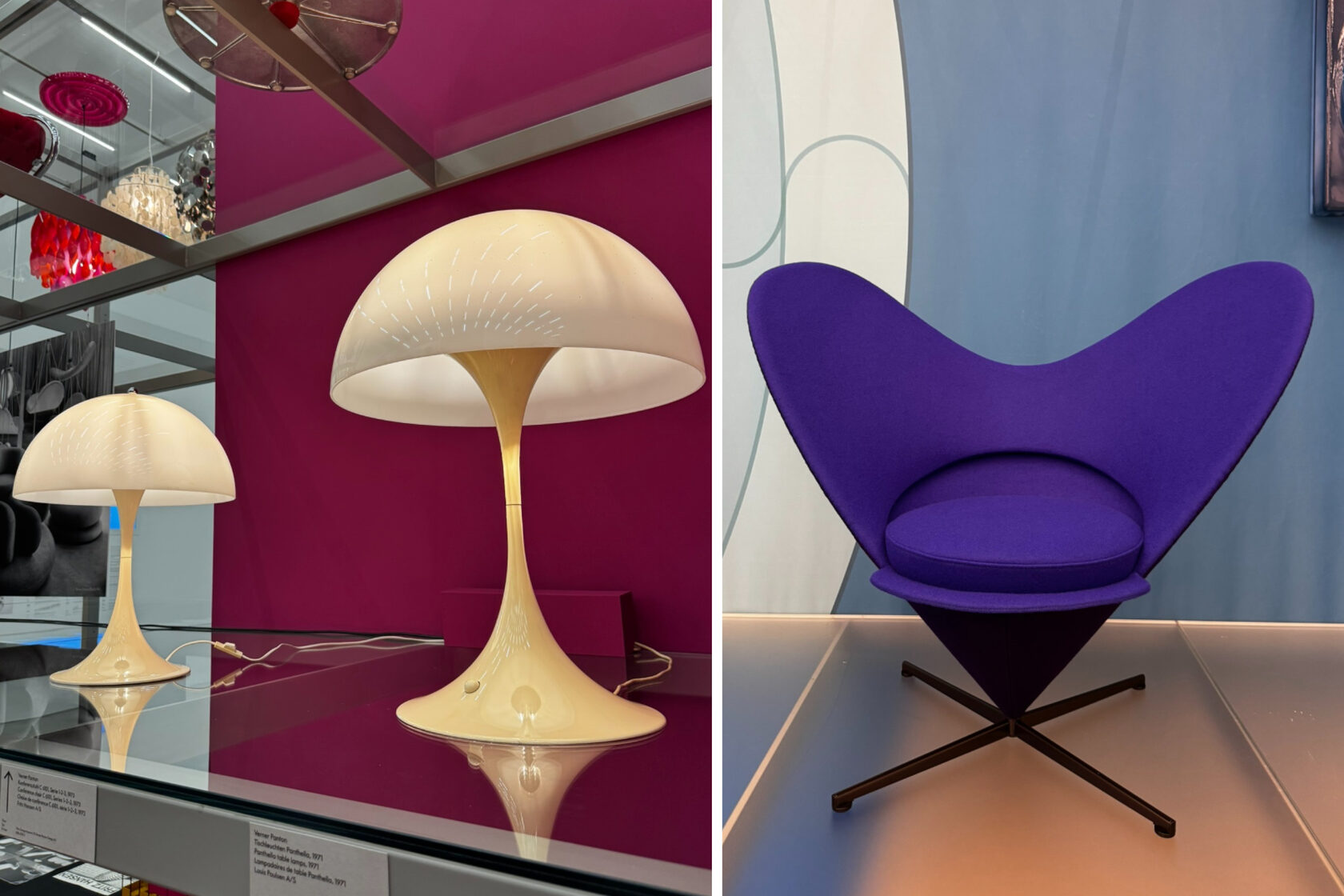
In this sense, Panton represented the post-war belief in the future, rooted in the idea that human imagination had the power to transform everyday surroundings as well as society itself for the better. His designs were therefore not conceived as an escape from reality but as reflections of a freer version of it, one that remained open to experimentation and new possibilities. This may also explain why, even today, amid a renewed preference for restrained and minimalist interiors, works such as the Panthella lamp and the Heart Cone Chair continue to fit naturally into contemporary spaces, demonstrating that boldness in design does not necessarily lose its relevance over time.
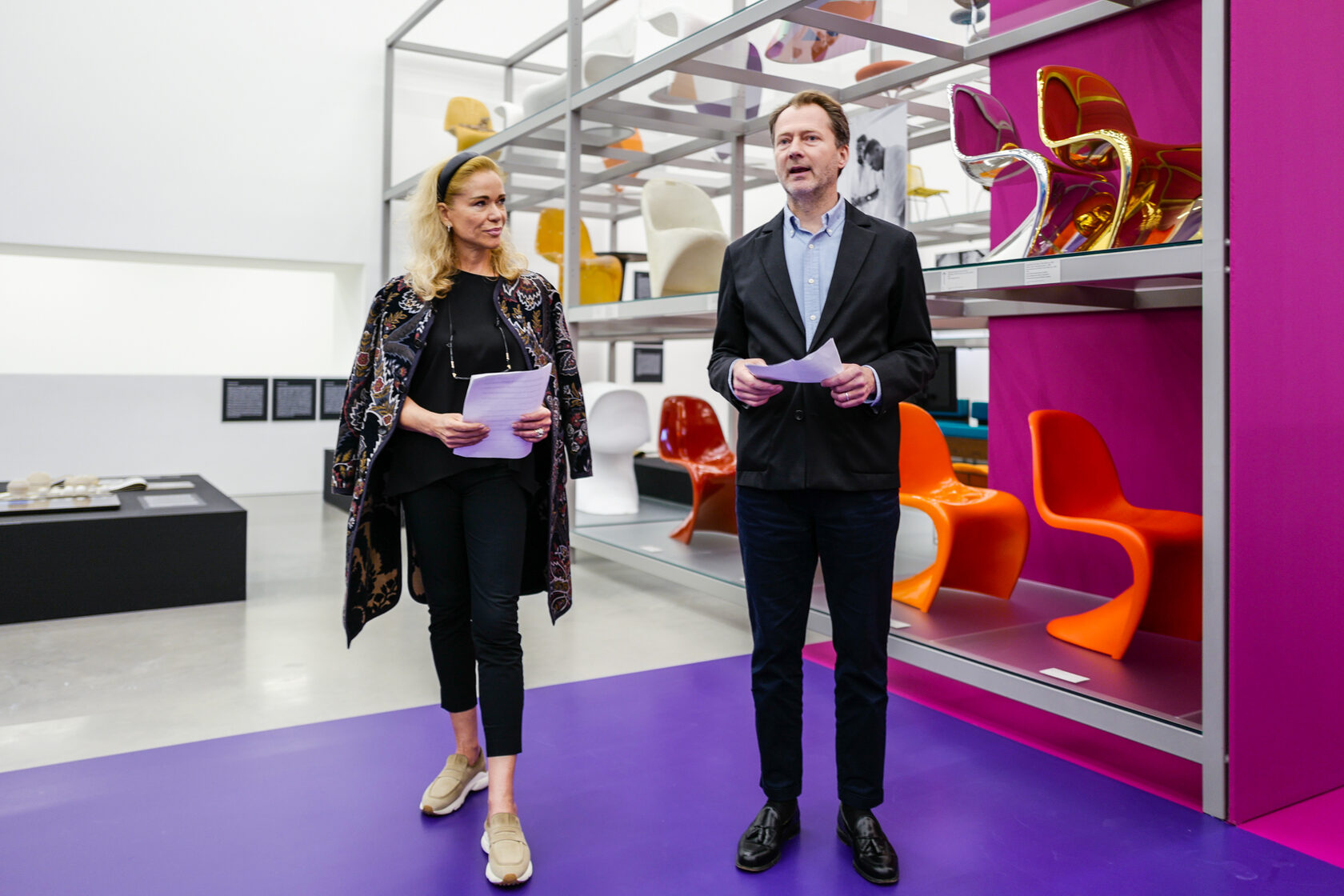
Panton’s vision is kept alive by his daughter, Carin Panton von Halem, Director of Verner Panton Design AG. As a key figure in preserving his legacy, she opened the exhibition at the Vitra Design Museum, a close partner with whom the Panton family has continued to work over decades.
Dates: 23 May 2026 — 9 May 2027
Venue: Vitra Design Museum, Weil am Rhein, Germany
Contributor: Iuliia Egorova
Cover: Verner Panton. Panton Chair. Installation views. Vitra Design Museum. 2026 © Photo: Daria Neuhaus