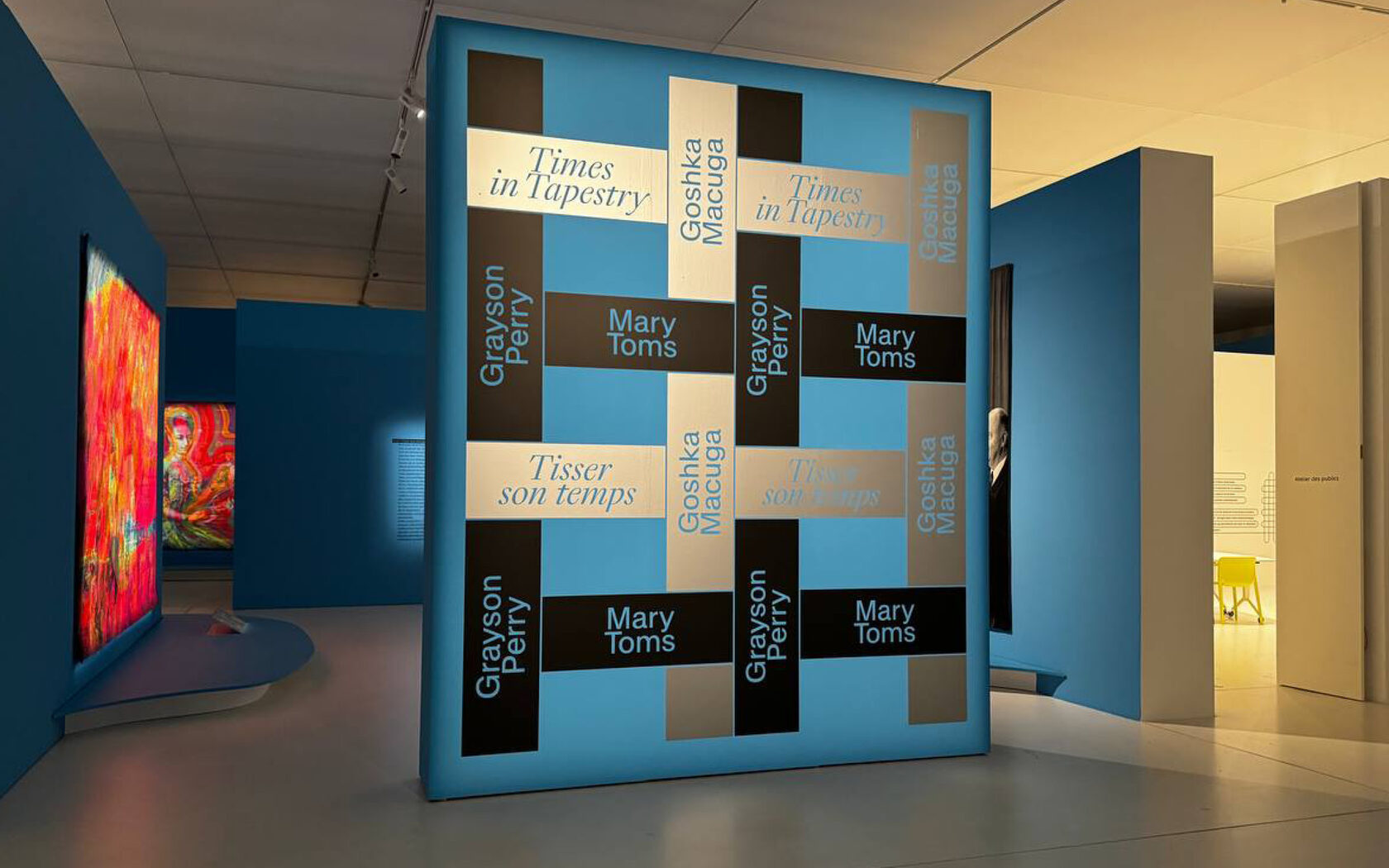
A language woven in wool and silk, having whispered the secrets of kings and shouted the protests of rebels, now steps into the 21st century with fresh urgency. Times in Tapestry unveils this silent eloquence. MUDAC and the Toms Pauli Foundation present an exhibition where centuries‑old masterpieces meet radical contemporary visions. By bringing together historical artworks and modern interventions, the show demonstrates that this ancient medium continues to engage with urgent questions of our time.

Here, tapestry is not mere decoration: it is a living archive of power, a canvas for dissent, and a bridge between past and present. As historical tapestries from Brussels’ golden age encounter provocative works by Goshka Macuga and Grayson Perry, the medium reveals its enduring power — to tell truths, challenge hierarchies, and weave new narratives for our time.
Wall tapestries have long served as powerful tools for storytelling, functioning as visual chronicles that bear witness to history. Beginning in the medieval period, these works have created a unique space for dialogue, bringing together collective aspirations, historical narratives, and contemporary concerns.
Wall tapestries have long served as powerful tools for storytelling, functioning as visual chronicles that bear witness to history. Beginning in the medieval period, these works have created a unique space for dialogue, bringing together collective aspirations, historical narratives, and contemporary concerns.

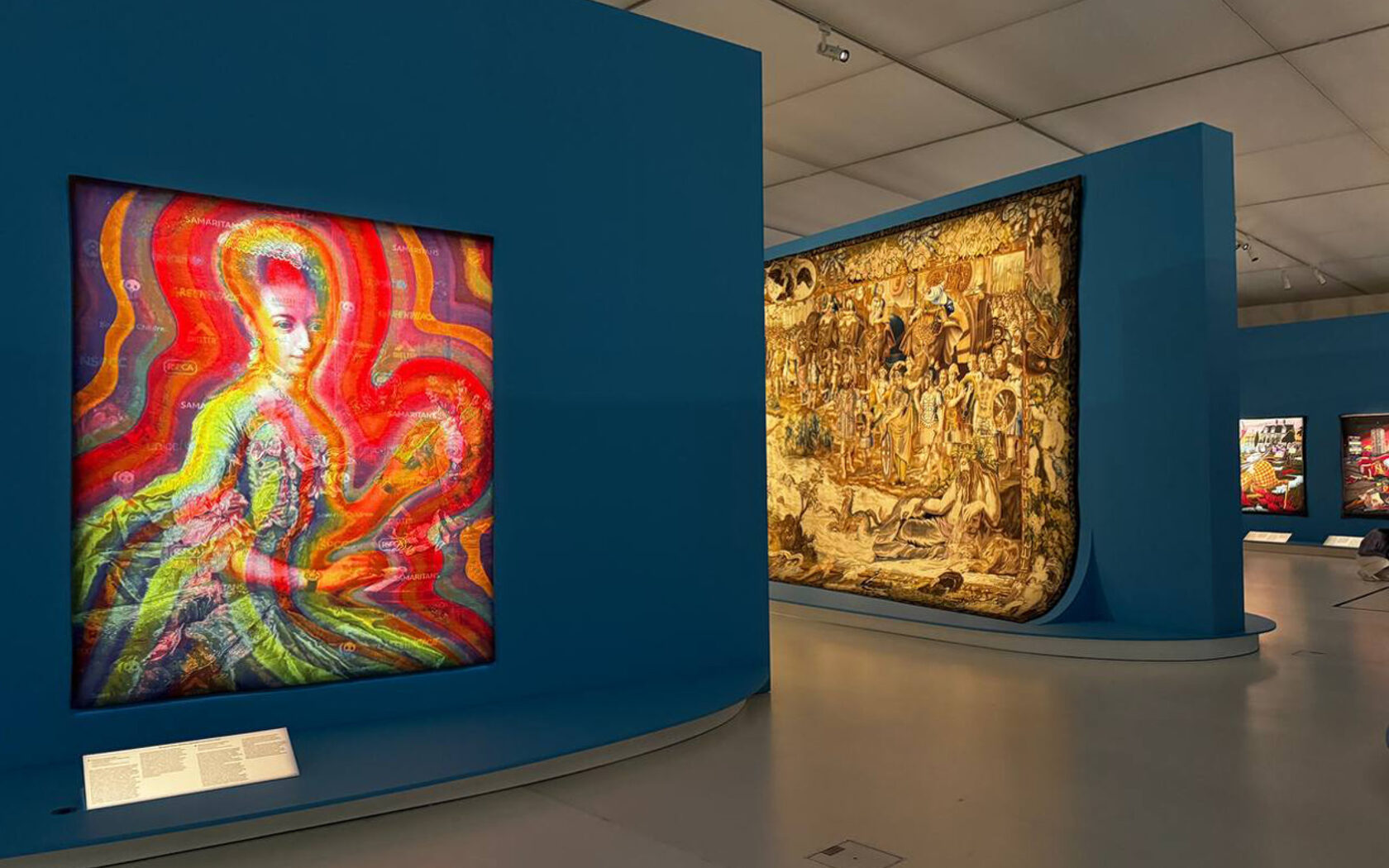
Rooted in the Toms collection, the exhibition presents over a hundred tapestries woven in Brussels during the golden age of tapestry (1660–1725). These monumental works, such as The Story of Scipio Africanus and The Emperors Titus and Vespasian, depict legendary battles and classical myths. Rich in symbolism, they once adorned palaces and churches as statements of elite power. Two pieces from the collection will be unveiled to the public for the first time, underscoring the rarity and prestige of this assemblage.
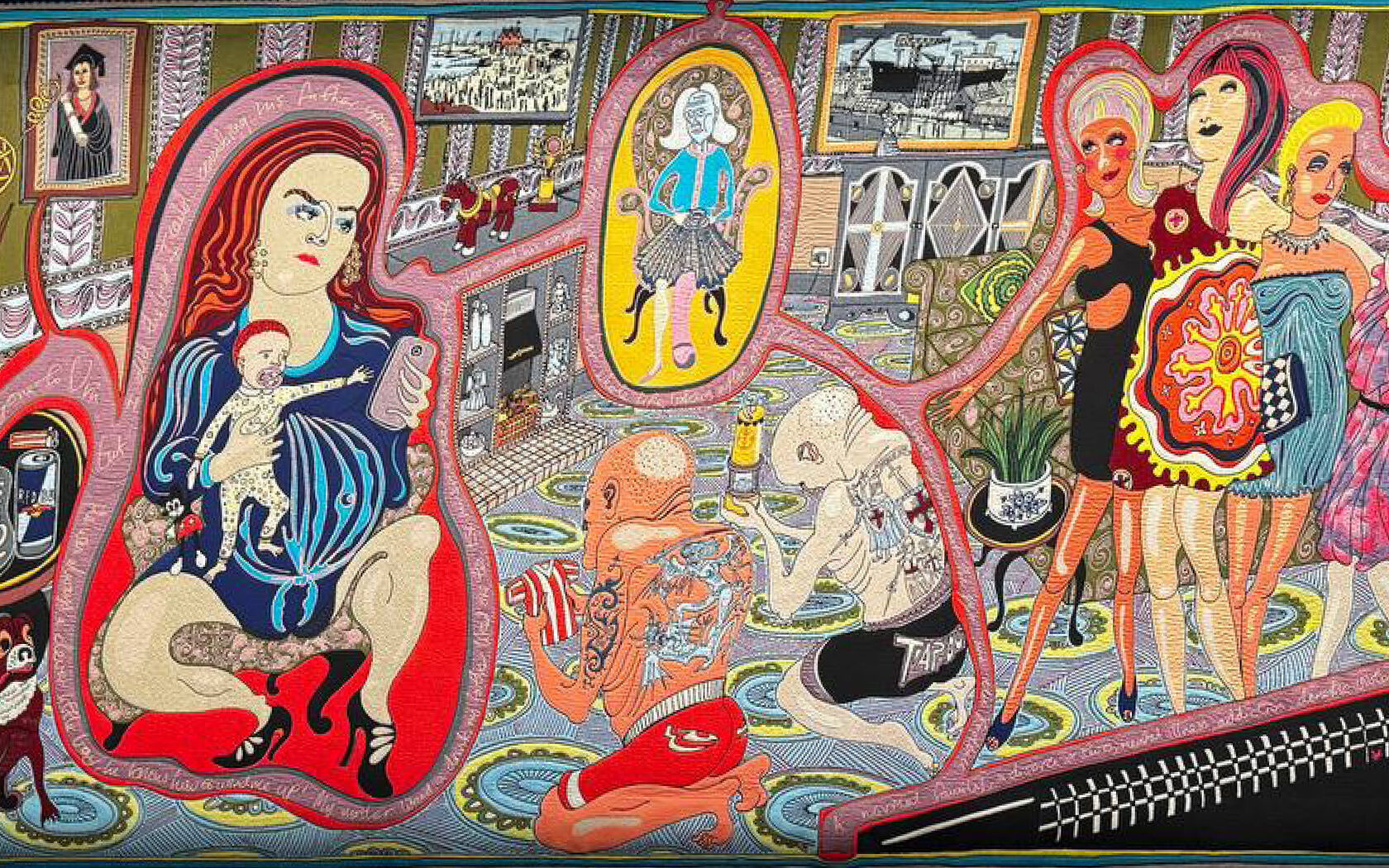
Yet the exhibition doesn't stop at historical veneration. Contemporary artists Goshka Macuga and Grayson Perry reframe tapestry as a critical tool for our times. Perry’s The Vanity of Small Differences (2012) uses the medium to satirise British class dynamics, transforming everyday dramas to the scale of epic narratives. His choice of tapestry, traditionally linked to aristocratic tastes, becomes a deliberate act of reclamation, elevating marginalised crafts and challenging hierarchies of art.
Women of All Lands Unite (2013)
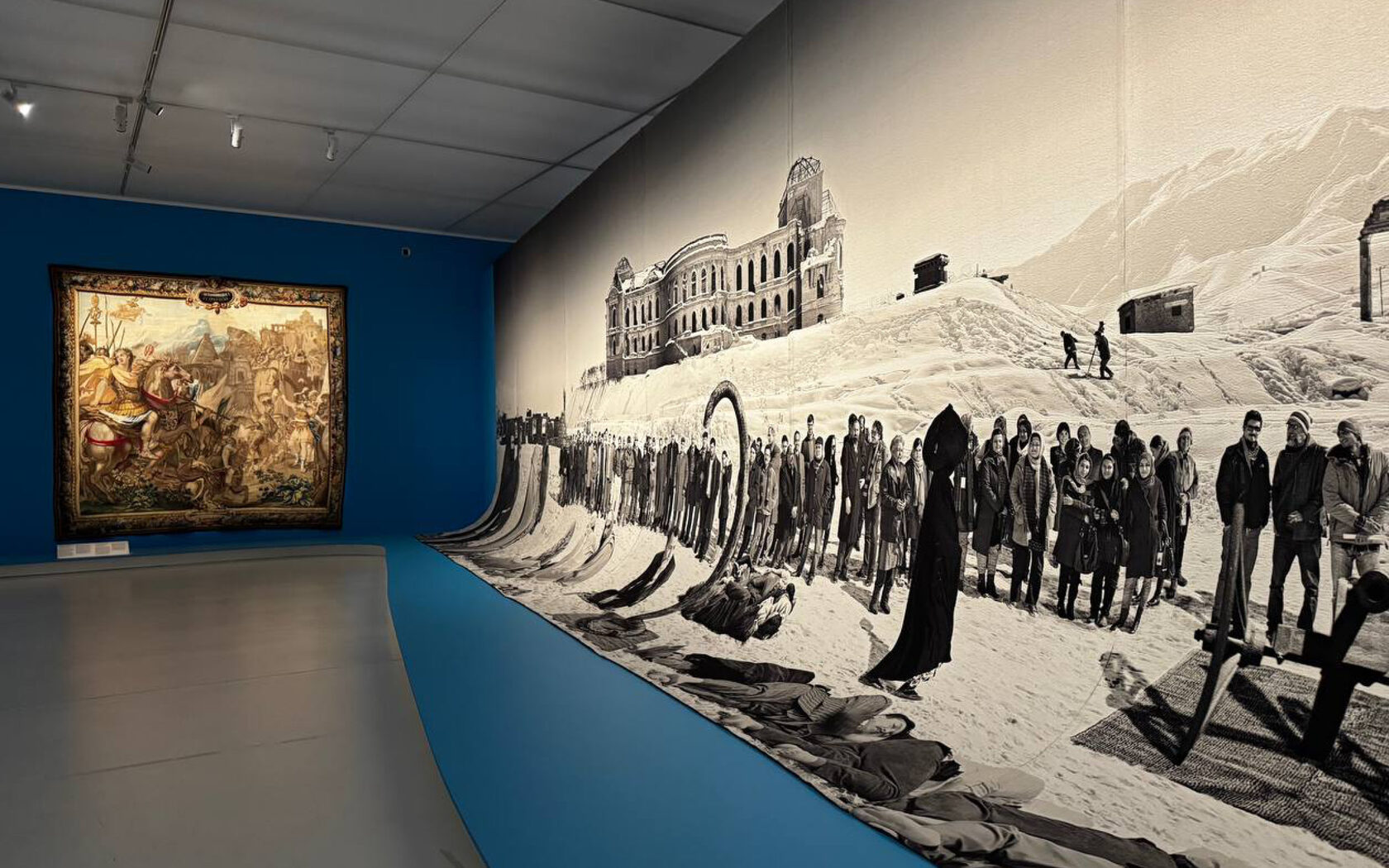
Macuga, meanwhile, treats tapestry as a spatial and intellectual canvas. Her piece Death of Marxism, Women of All Lands Unite (2013) layers multiple temporalities and political tensions, inviting viewers to become active participants in the narrative. Macuga’s use of 3D effects further blurs the line between the observer and the protagonist, proving that tapestry can be immersive and interactive.
Macuga, meanwhile, treats tapestry as a spatial and intellectual canvas. Her piece Death of Marxism, Women of All Lands Unite (2013) layers multiple temporalities and political tensions, inviting viewers to become active participants in the narrative. Macuga’s use of 3D effects further blurs the line between the observer and the protagonist, proving that tapestry can be immersive and interactive.
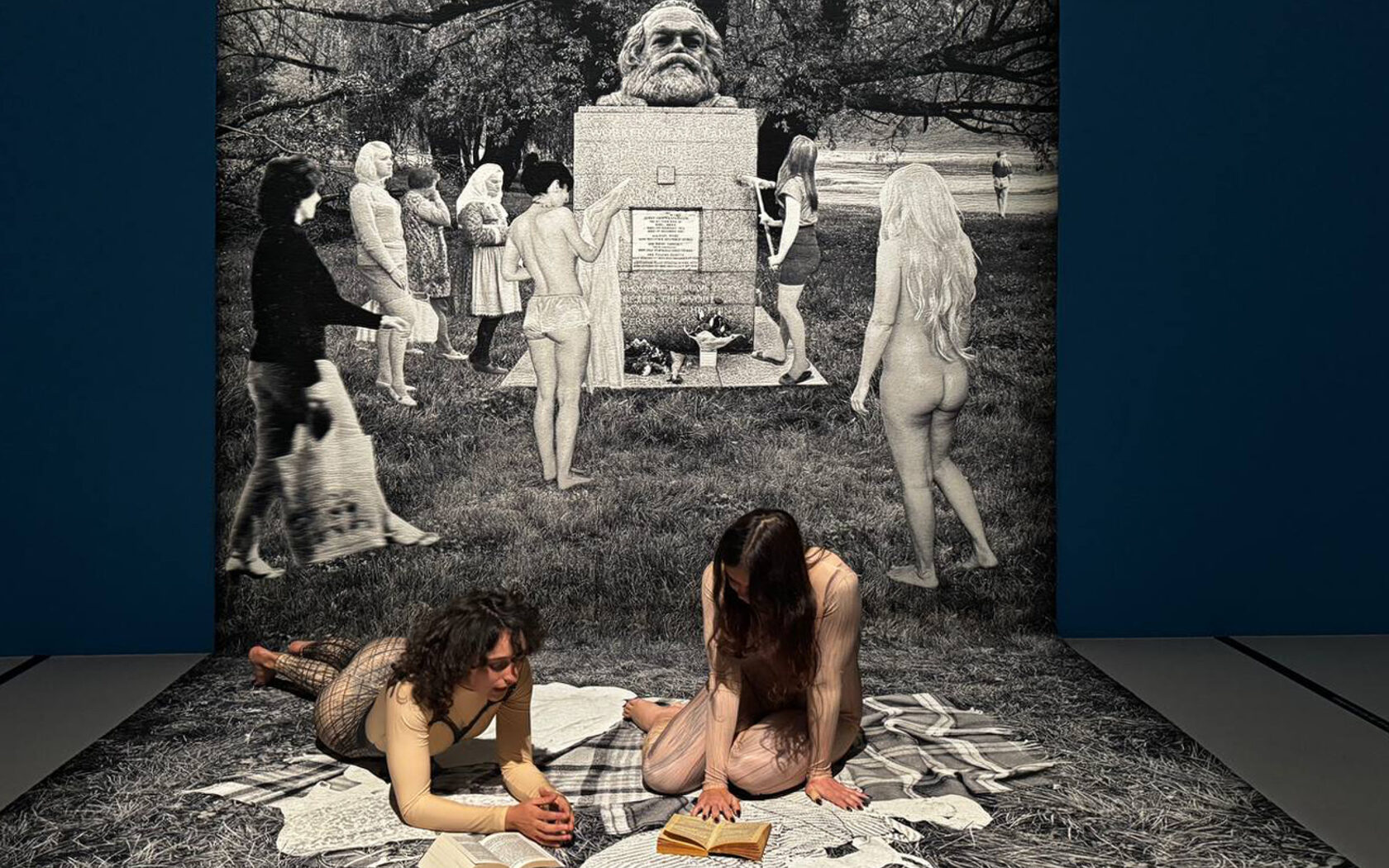
Goshka Macuga’s tapestry (2013) transforms into a performance space: its lower edge extends onto the floor, creating an interactive zone.
At the MUDAС exhibition, women in Suit for Tichy outfits, designed by Macuga, recreate the tapestry’s picnic scene. This scene reimagines Karl Marx’s tomb at Highgate Cemetery as a leisure gathering, inspired by Manet’s Luncheon on the Grass.
This juxtaposition creates a powerful dialogue between feminist themes and Marxist ideology. Through the performance, Macuga challenges traditional ideologies and reinterprets historical narratives. The artwork invites viewers to reconsider the objectification of women’s bodies in art history and reflect on the intersection of class struggle and feminist activism.
At the MUDAС exhibition, women in Suit for Tichy outfits, designed by Macuga, recreate the tapestry’s picnic scene. This scene reimagines Karl Marx’s tomb at Highgate Cemetery as a leisure gathering, inspired by Manet’s Luncheon on the Grass.
This juxtaposition creates a powerful dialogue between feminist themes and Marxist ideology. Through the performance, Macuga challenges traditional ideologies and reinterprets historical narratives. The artwork invites viewers to reconsider the objectification of women’s bodies in art history and reflect on the intersection of class struggle and feminist activism.
The Nature of the Beast (2009)
The Nature of the Beast is also one of the key works in Goshka Macuga’s practice. In 2009, the artist unveiled an installation bearing the same title, which centred on the Guernica tapestry — a textile interpretation of Picasso’s iconic painting, crafted in 1955 and originally intended as a powerful condemnation of war and fascism. In 2003, it was concealed behind a blue curtain during Colin Powell’s address to the United Nations, in which he outlined the perceived threat posed by Iraq.
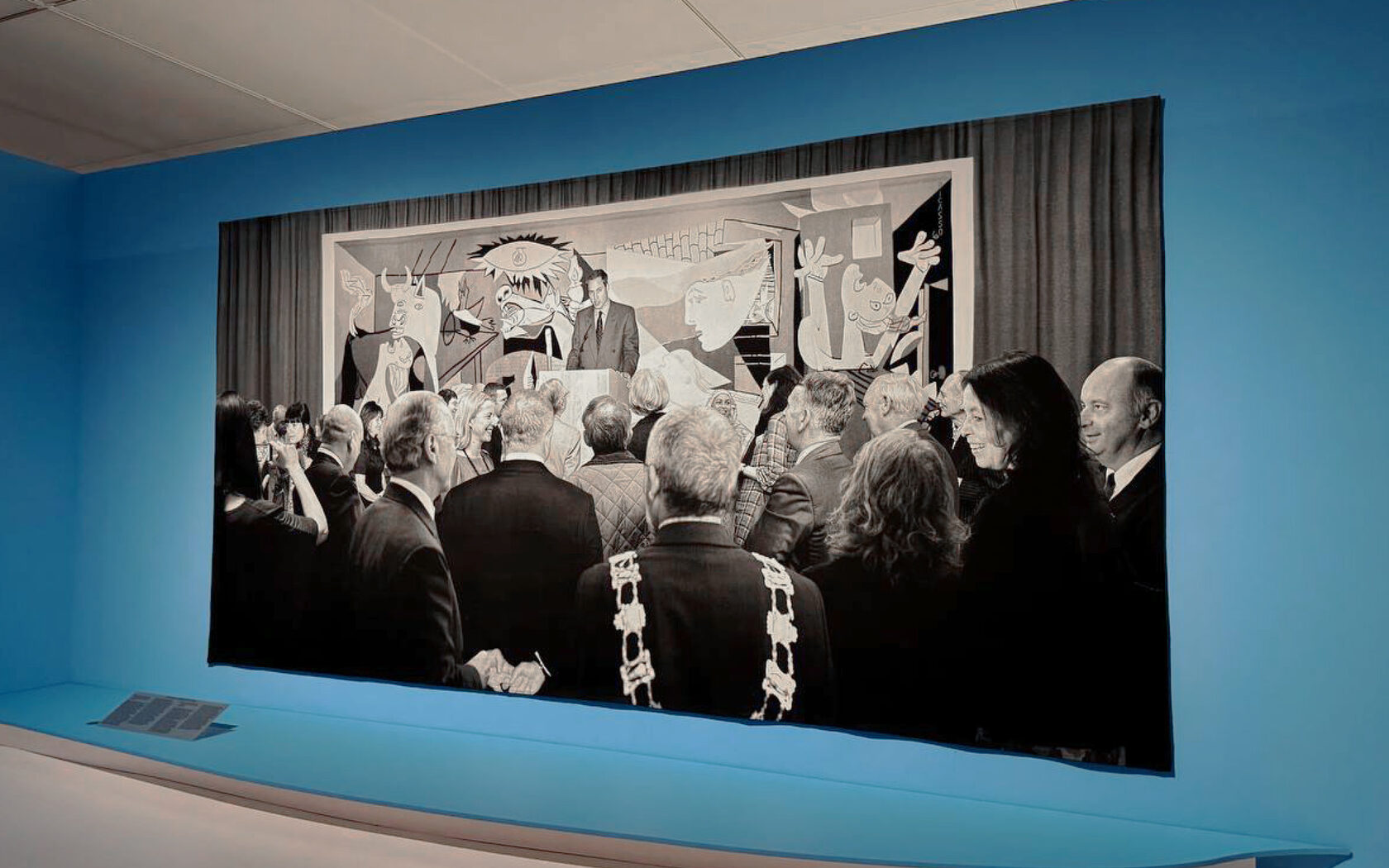
Macuga’s choice to display the tapestry at the Whitechapel Gallery was also a deliberate nod to the institution’s historical connection with Picasso’s masterpiece. In 1939, the gallery hosted the original Guernica canvas as part of a fundraising effort to support the Spanish people.
The Nature of the Beast weaves together press photographs, among them images of Prince William delivering a speech in front of the Guernica tapestry, as well as snapshots of the artist herself. Macuga examines the complex ways in which visual imagery is revived within the realm of politics.
The Nature of the Beast weaves together press photographs, among them images of Prince William delivering a speech in front of the Guernica tapestry, as well as snapshots of the artist herself. Macuga examines the complex ways in which visual imagery is revived within the realm of politics.
The dialogue between past and present is not merely thematic. Historically, tapestries served as propaganda. Consider the Bayeux Tapestry, which glorified William the Conqueror’s victory in 1066. Today, artists subvert this legacy, using the same medium to critique consumerism, globalization, and power structures.
The exhibition thus demonstrates that tapestry remains far more than a decorative art form. Instead, it emerges as a medium capable of addressing universal questions from identity and migration to power and memory, while maintaining its unique tactile and narrative qualities. By placing historical and modern works in direct dialogue, Times in Tapestry invites viewers to reflect on how the act of weaving, both literal and metaphorical, continues to shape our understanding of the past, present, and future.
You can find out more by visiting the website
Dates: 7 November 2025 — 8 March 2026
Location: The Museum of Contemporary Design and Applied Arts (MUDAC) in Lausanne, Place de la Gare 17
Location: The Museum of Contemporary Design and Applied Arts (MUDAC) in Lausanne, Place de la Gare 17
Contributor: Maria Efimova
Cover photo: Grayson Perry. Expulsion from Number 8 Eden Close. 2012 © Art Council Collection