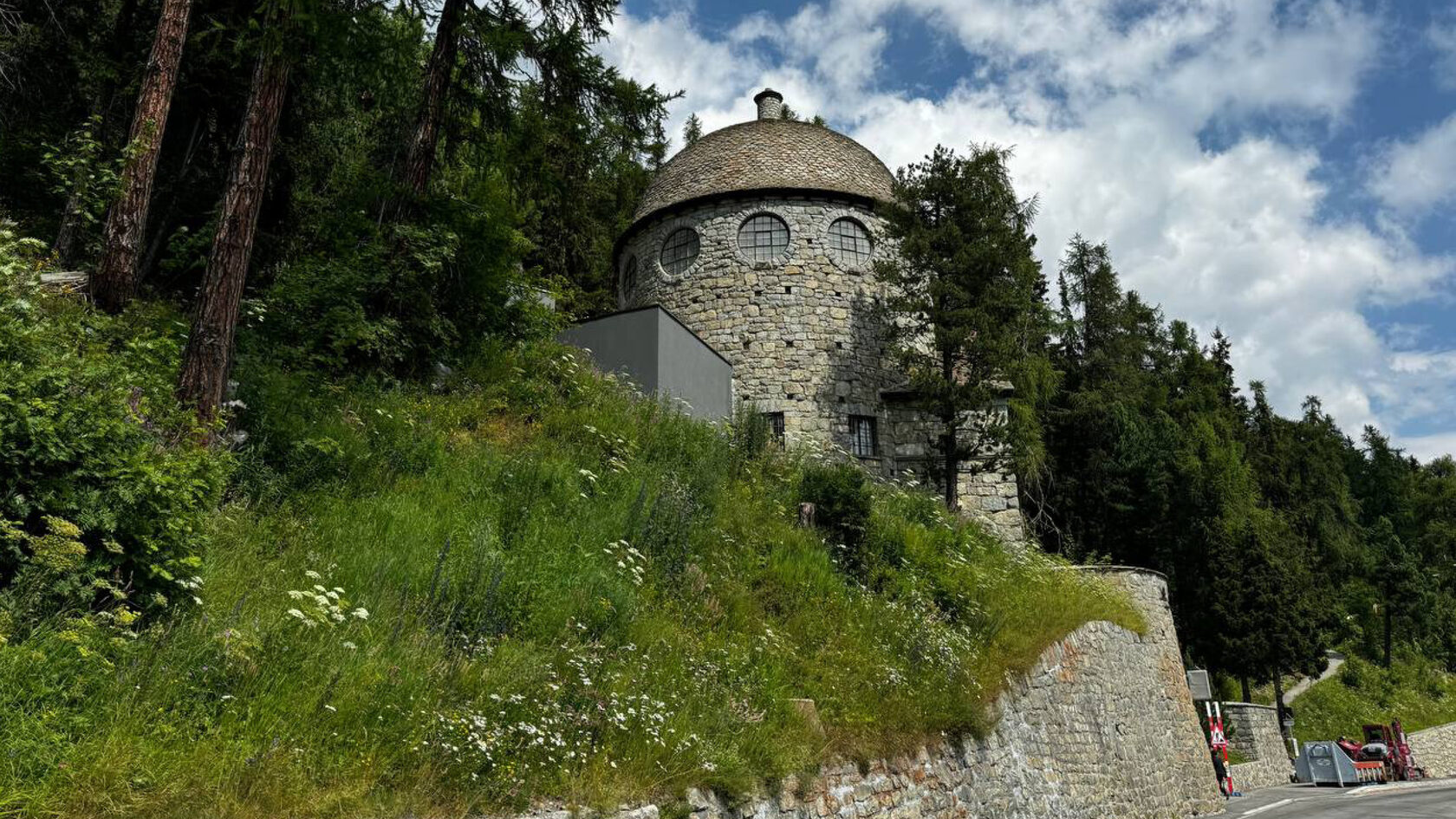
In 2024, Switzerland commemorates 125 years since the death of one of the most famous Swiss Symbolist painters, Giovanni Segantini. In this context, it is especially worth to visit his monographic museum in St. Moritz, because its unique collection of about 50 works from all the periods of the artist's career and photographs from the family archive rarely leaves the city. The latest of the museum's special projects, the exhibition "Between Milan and Maloja – The Importance of Light and Shadow in the Works of the Young Realist and Mature Symbolist Segantini" (20 May – 20 October 2024), presents little-known paintings and fragile graphics from his Milanese, Savognin and Engadine creative periods.
Giovanni Segantini (1858–1899) was born in Arco, which belonged to Austria. Born into a poor family and having lost his parents early, the future artist lived as a tramp since childhood, escaping from penal colonies, until 1873, when his half-brother Napoleone took him to Trentino to work in a photo studio. The ability to retouch, to work with absolute light and absolute shadow and to build a composition helped the young genius enter the Brera Academy having some basic knowledge of art. At the Academy he made friends with artists and other bohemians who sympathized with the Italian movement Scapigliatura ("Disheveledness"). Mingling with artists and intellectuals in Milan helped Segantini get acquainted with the peasant landscapes of Anton Mauve and Jean-François Millet, which inspired him for many years. In addition, Segantini became close with the Bugatti family, famous for their ethnic style in furniture and luxury cars. The artist fell in love with Luigia Pierina Bugatti (Bice) and they became a couple for life.
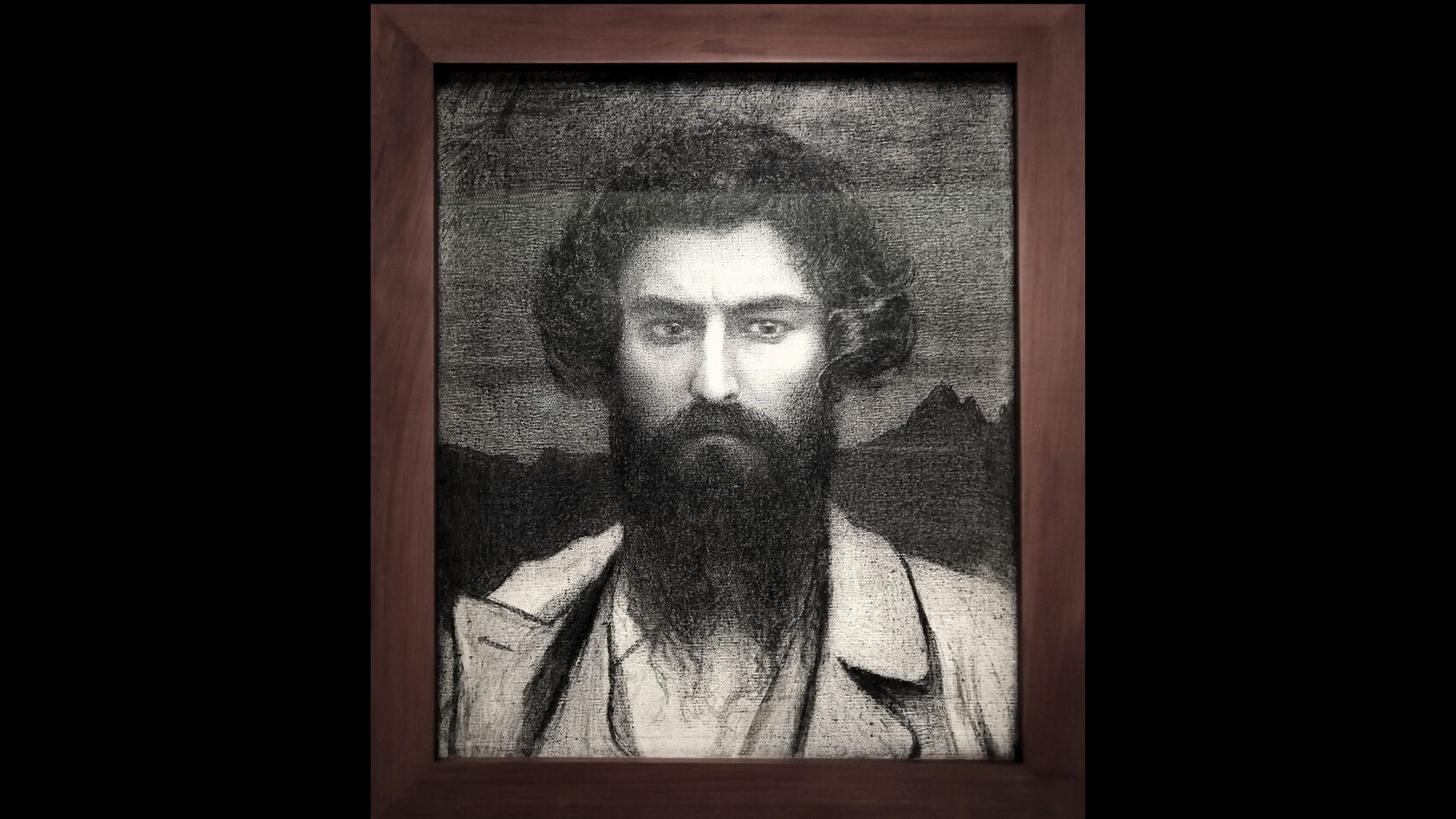
Due to the fact that neither Austria nor Italy helped the artist to abandon his status of a "stateless person", all his life he suffered from the impossibility to formalize his family relations, as well as a ban on traveling. And even world fame did not help, though it quickly came to him due to the detailed texture of the comma-brush stroke in his paintings, as well as the revolutionary technique of tonal modeling of light and shadow in color.
In order not to feel locked in the "golden cage" of Milanese lux, Segantini decided to lead a hermit life in the countryside, where he worked en plein air, comprehending the perfect beauty of nature, and his beloved woman read him Nietzsche and Baudelaire when raising four children left her some free time.
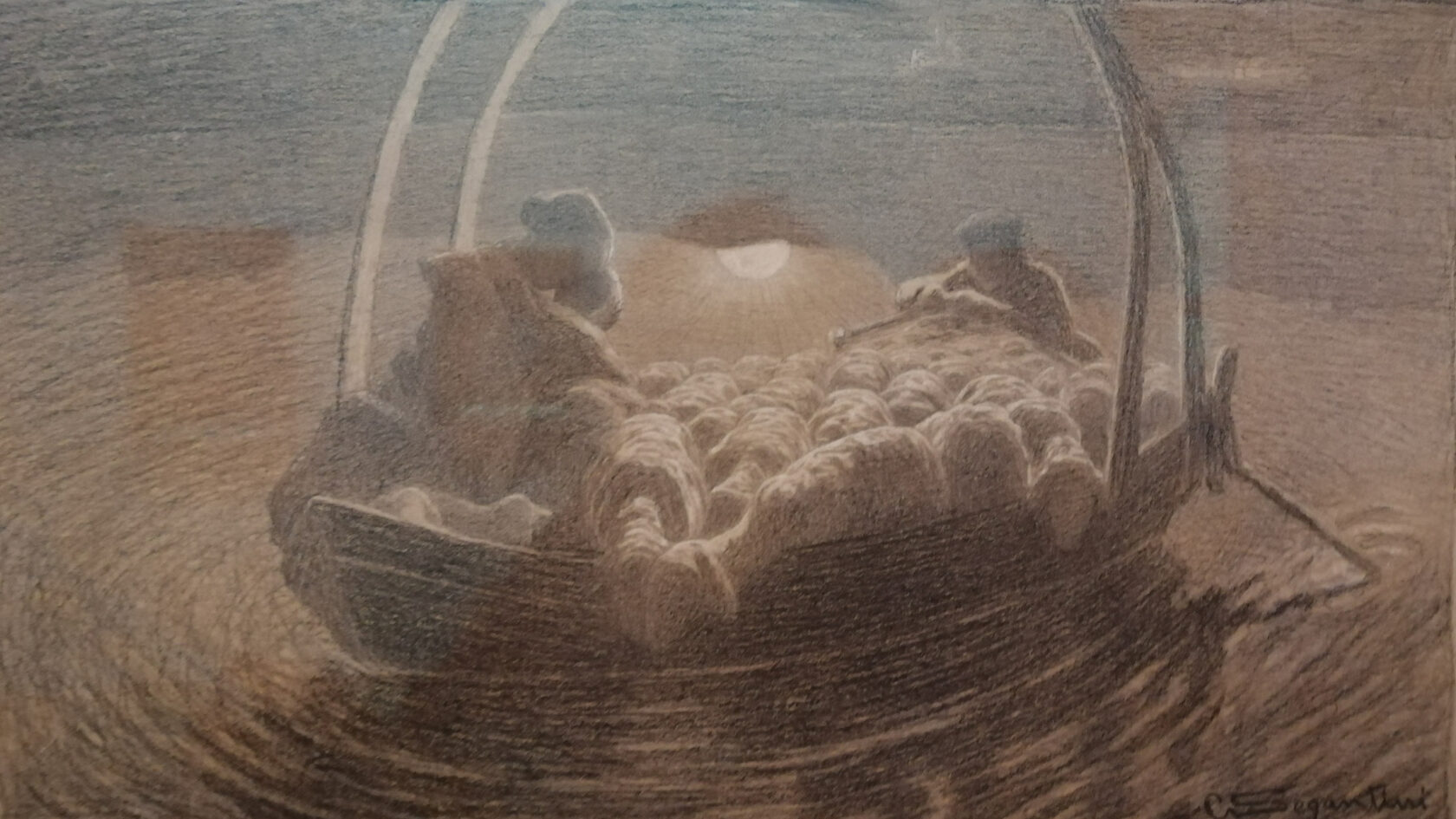
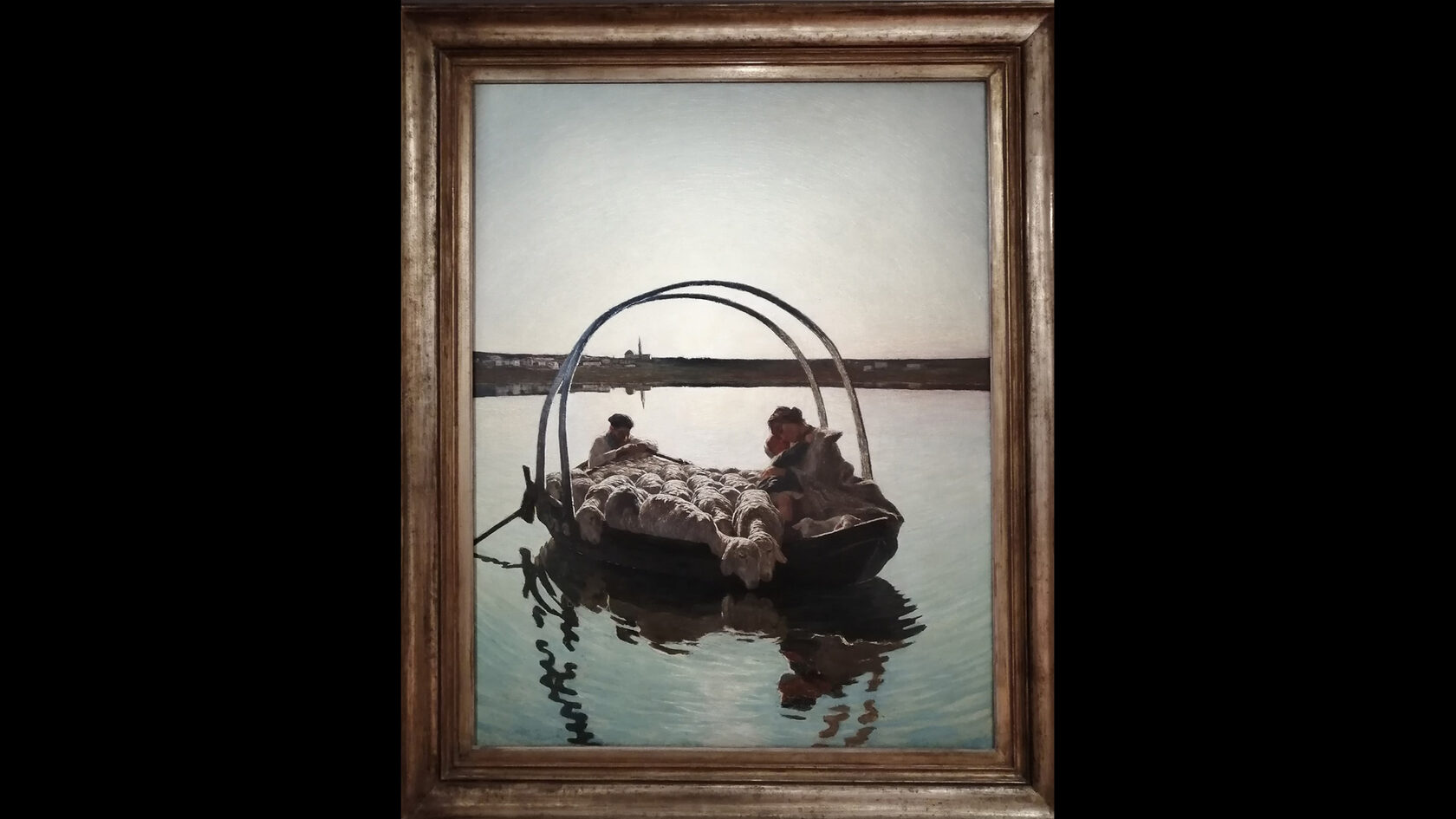
From the 1880s, he left for the rural landscape of the Alps and gradually moved to ever higher altitudes in the mountains. In the meantime, he painted still lifes and landscapes in Pusiano near lake Como. In his still lifes, he tries to comprehend nature and, through the texture of the brushstroke, be as “nature-like” as possible. The St. Moritz Museum has still lifes and paintings of flowered trees, among which the work “Pike and Roses” stands out. According to medieval ideas about Christian symbolism, pike, or luce, in Italian luccio, goes back to the Latin word for light: lux. And the Lord is light. Also, in the mountain landscape in the open air near Lecco, the artist for the first time turns to the image of a boat on a lake with a shepherd, sheep, and a woman hugging a baby in the boat. This work, as the second version of the subject from the museum's collection, entitled "Ave Maria at the Crossing", was awarded a golden medal at the 1883 World Exhibition in Amsterdam.
In order not to feel locked in the "golden cage" of Milanese lux, Segantini decided to lead a hermit life in the countryside, where he worked en plein air, comprehending the perfect beauty of nature, and his beloved woman read him Nietzsche and Baudelaire when raising four children left her some free time.
From the 1880s, he left for the rural landscape of the Alps and gradually moved to ever higher altitudes in the mountains. In the meantime, he painted still lifes and landscapes in Pusiano near lake Como. In his still lifes, he tries to comprehend nature and, through the texture of the brushstroke, be as “nature-like” as possible. The St. Moritz Museum has still lifes and paintings of flowered trees, among which the work “Pike and Roses” stands out. According to medieval ideas about Christian symbolism, pike, or luce, in Italian luccio, goes back to the Latin word for light: lux. And the Lord is light. Also, in the mountain landscape in the open air near Lecco, the artist for the first time turns to the image of a boat on a lake with a shepherd, sheep, and a woman hugging a baby in the boat. This work, as the second version of the subject from the museum's collection, entitled "Ave Maria at the Crossing", was awarded a golden medal at the 1883 World Exhibition in Amsterdam.
In search of varied mountain landscapes and more affordable housing for his large family, the artist went on foot with Bici and their children to Savognin, Graubünden. There, from 1886, he began working in the technique of divisionism, painting every detail of the mountain break, clouds and grass with texture. Today there is a walking route through Segantini's mountain plein airs — Graubünden area. In addition, you can visit Segantini's hut, the place of his death, and also get to a traditional Swiss chalet in Maloja, still owned by the artist's descendants.
Due to government persecution, the artist moved his family to Engadin, where Segantini met Giovanni Giacometti, the father of the great Swiss sculptor Alberto Giacometti. Since Segantini was not given a passport or citizenship, he refused to pay taxes to the canton of Savognin. In his new location, he quickly gained recognition from the locals, so that in 1897 the owners of a group of hotels commissioned the artist to create a huge panorama of the Engadine Valley, which was planned to be shown in a specially built round hall at the 1900 World Exhibition in Paris. This round pavilion was supposed to have a dome, and Segantini even built a wooden prototype of it next to his home. After his death, this form of a round "temple of the arts" served as inspiration for Nikolaus Hartmann, the architect of the Segantini Museum in St. Moritz, which has been open to the public since 1908.
Under the dome, you can still see the large triptych from the project dedicated to the Engadine that Segantini managed to implement. These are the canvases of the Alpine triptych (1898–1899) "Becoming. Nature", "Being. Life" and "Disappearance. Death". They are supplemented in the museum exposition by the sketches for the final design of the panorama. It was during the work on the painting "Nature" that became his posthumous masterpiece, when he died from peritonitis in the mountains near Schafberg. In the foreground of the painting, a woman is depicted hugging a baby, like Madonna. Cows are grazing in a meadow by a pond, a peasant man and a peasant woman are walking past, and in the background, the white heights of the Alpine mountains stand unshakably in eternity.
Due to government persecution, the artist moved his family to Engadin, where Segantini met Giovanni Giacometti, the father of the great Swiss sculptor Alberto Giacometti. Since Segantini was not given a passport or citizenship, he refused to pay taxes to the canton of Savognin. In his new location, he quickly gained recognition from the locals, so that in 1897 the owners of a group of hotels commissioned the artist to create a huge panorama of the Engadine Valley, which was planned to be shown in a specially built round hall at the 1900 World Exhibition in Paris. This round pavilion was supposed to have a dome, and Segantini even built a wooden prototype of it next to his home. After his death, this form of a round "temple of the arts" served as inspiration for Nikolaus Hartmann, the architect of the Segantini Museum in St. Moritz, which has been open to the public since 1908.
Under the dome, you can still see the large triptych from the project dedicated to the Engadine that Segantini managed to implement. These are the canvases of the Alpine triptych (1898–1899) "Becoming. Nature", "Being. Life" and "Disappearance. Death". They are supplemented in the museum exposition by the sketches for the final design of the panorama. It was during the work on the painting "Nature" that became his posthumous masterpiece, when he died from peritonitis in the mountains near Schafberg. In the foreground of the painting, a woman is depicted hugging a baby, like Madonna. Cows are grazing in a meadow by a pond, a peasant man and a peasant woman are walking past, and in the background, the white heights of the Alpine mountains stand unshakably in eternity.
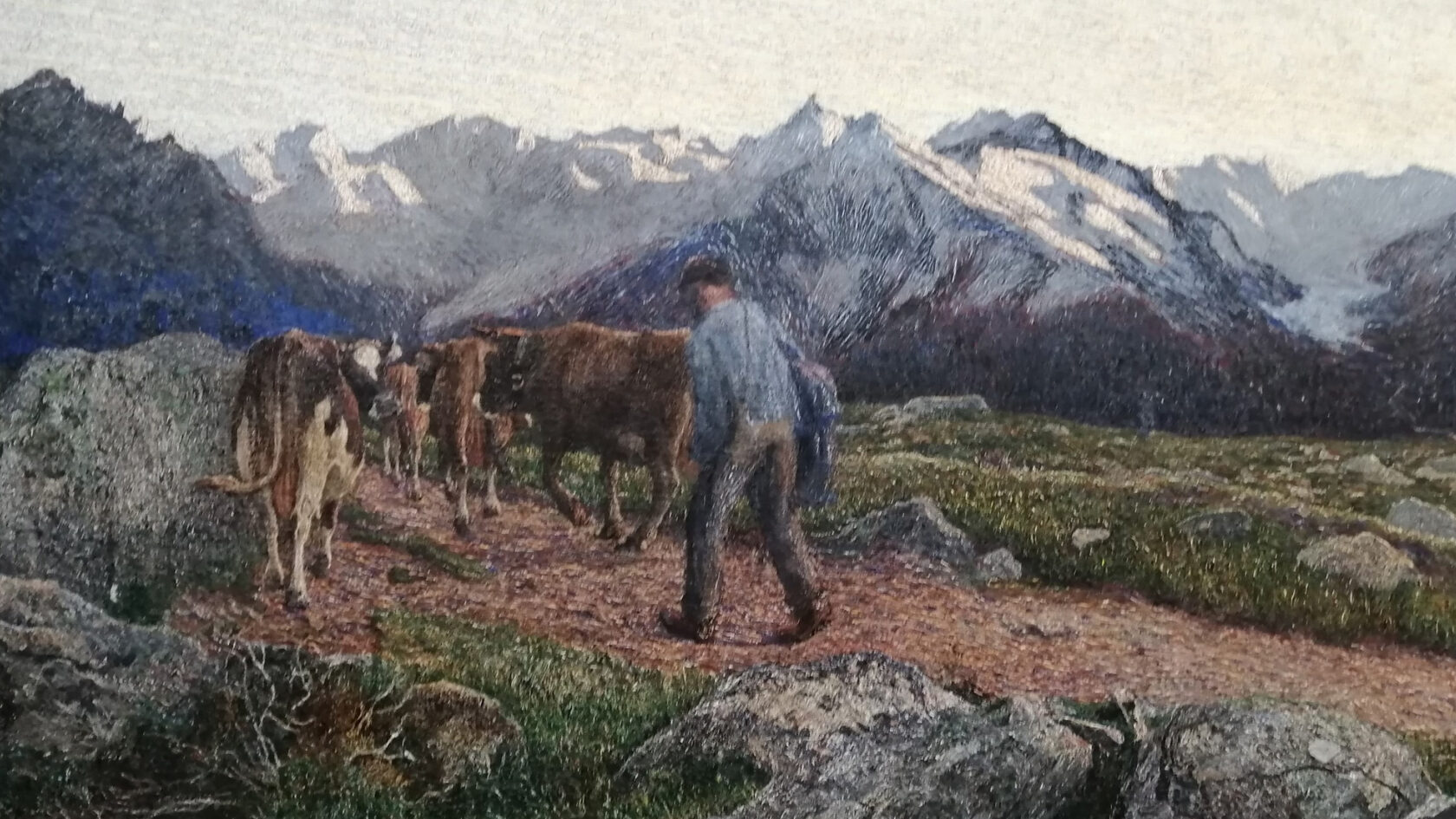
No one like Segantini can paint snow, the special light of the rarefied mountain air, and the sky with clouds down to the smallest detail. With his Alpine vanitas this maestro of white illustrates the thesis that in the mountains it seems easier to "be closer to God."
The collection of works in St. Moritz focuses on the life of peasants among the Alps — "Midday in the Alps", "Kiss at the Crucifix", "Storm in the Alps", "Carrying Water", " Grigionese Costume", "Hay Harvest", "Return from the Forest", "Dead Roe Deer", "Early Mass", etc. In this sense, the sky in his works has a philosophical meaning. In the oppositions of female images bad women and good women, foolish virgins and wise virgins, femmes fatales and bon femmes – the former in each pair are deprived of the sky, while the latter are given it as a gift. The hard-working peasant women seem not to notice it.
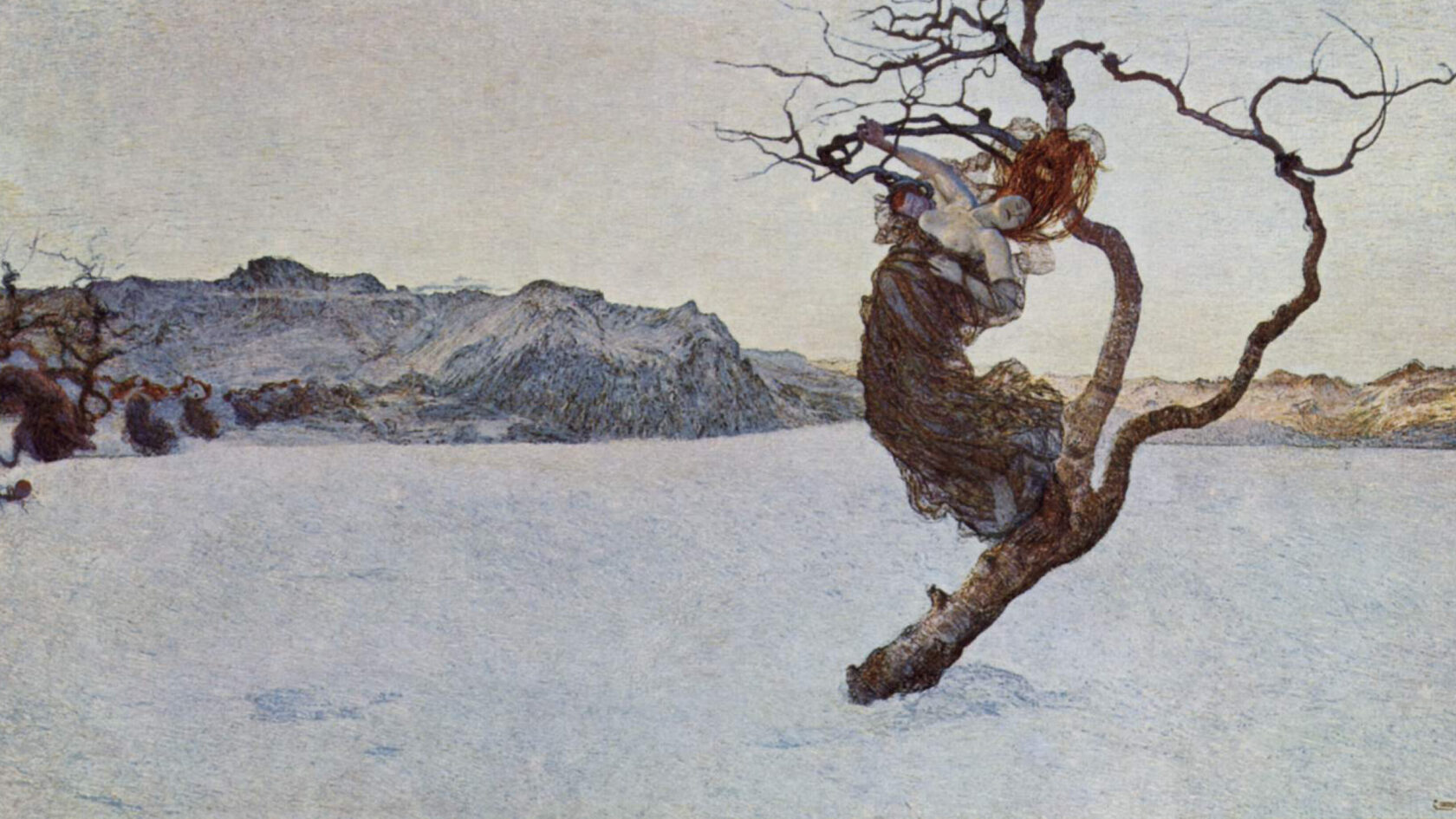
In symbolist works the sky is important, as, for example, in Segantini's most famous painting, "Bad Mothers" (1894), painted in the context of a cycle based on the text of the poem "Nirvana" by Luigi Illica. This work from the Vienna Belvedere collection is the closest in composition to "The Punishment of Lust" (1891). Here, the red-haired beauties who have fallen into a "frozen hell" soar below the sky and the white Alpine mountains above the snow-covered ground among the frozen trees. As for the characters of "Bad Mothers", after the repentance for the murder or abandonment of newborn babies, they are placed in cocoons on dried-up trees, where the babies bite their breasts as a sign of forgiveness and reunification. And then, after the atonement, the artist grants them the right to merge with nature against the backdrop of the mountains and heaven in the landscape.
The collection of works in St. Moritz focuses on the life of peasants among the Alps — "Midday in the Alps", "Kiss at the Crucifix", "Storm in the Alps", "Carrying Water", " Grigionese Costume", "Hay Harvest", "Return from the Forest", "Dead Roe Deer", "Early Mass", etc. In this sense, the sky in his works has a philosophical meaning. In the oppositions of female images bad women and good women, foolish virgins and wise virgins, femmes fatales and bon femmes – the former in each pair are deprived of the sky, while the latter are given it as a gift. The hard-working peasant women seem not to notice it.
In symbolist works the sky is important, as, for example, in Segantini's most famous painting, "Bad Mothers" (1894), painted in the context of a cycle based on the text of the poem "Nirvana" by Luigi Illica. This work from the Vienna Belvedere collection is the closest in composition to "The Punishment of Lust" (1891). Here, the red-haired beauties who have fallen into a "frozen hell" soar below the sky and the white Alpine mountains above the snow-covered ground among the frozen trees. As for the characters of "Bad Mothers", after the repentance for the murder or abandonment of newborn babies, they are placed in cocoons on dried-up trees, where the babies bite their breasts as a sign of forgiveness and reunification. And then, after the atonement, the artist grants them the right to merge with nature against the backdrop of the mountains and heaven in the landscape.
With his painting of an almost textured mystical chiaroscuro, Segantini calls us to the religious admiration of the eternal grandeur of nature through the awareness of one's own modesty ideally embodied in the Swiss peasants. That is why there is an inscription on the monument to Segantini at the entrance to his museum: "La bellezza liberata dalla materia" (Beauty freed from matter). This credo influenced the art of the entire twentieth century, therefore not only the Italian futurists and Swiss modernists continued the philosophy of Segantini, but also the German performance artist Joseph Beuys in the second half of the century, with his more than 20-years-long work on an installation dedicated to Segantini, under the name "Voglio vedere le mie montagne" (I want to see my mountains, 1950–1971), in which he recreated Segnatini's hut and the place of his last and main desire.
Сontributor: Alena Grigorash
Cover: Segantini Museum in St. Moritz © Photo Daria Neuhaus