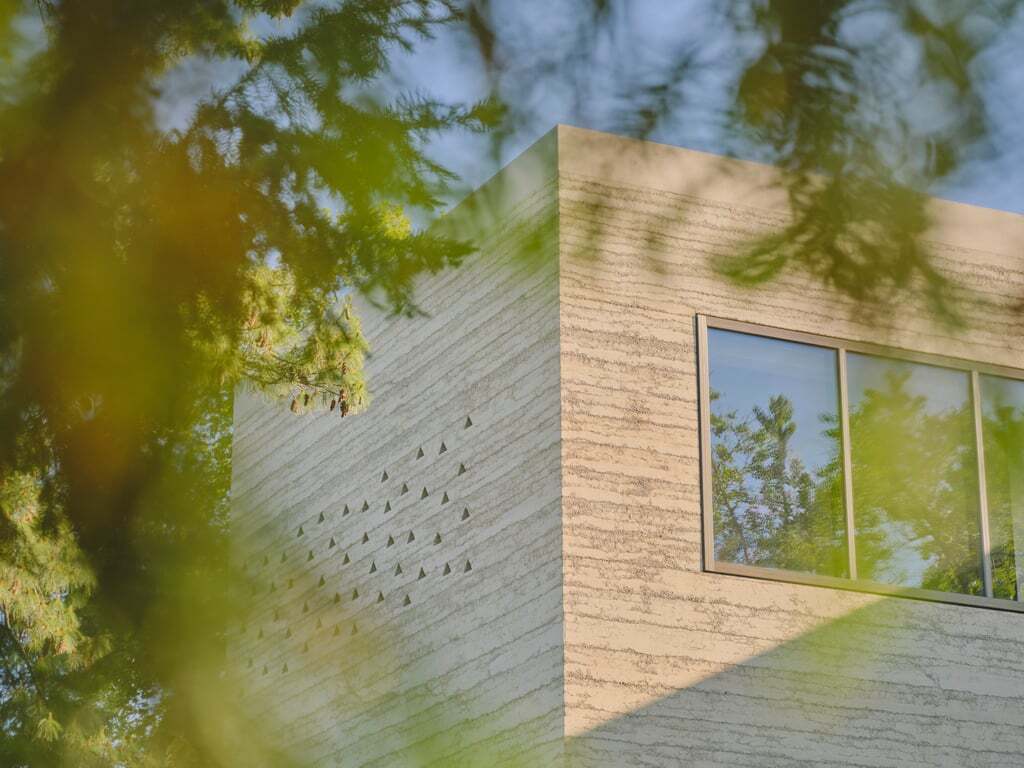
At the end of September, the Fondation Beyeler will begin the phased opening of three new buildings designed by Swiss architect Peter Zumthor, marking a significant expansion of its campus in Riehen. This additions will complement the museum’s original building, designed by Italian architect Renzo Piano and inaugurated in 1997. Elegantly embedded within the surrounding landscape, Piano’s landmark design is distinguished by its expansive glass façades and a light, seemingly floating roof — an architecture conceived in close dialogue with nature.
In 2017, the Fondation Beyeler launched an international competition for the expansion of its campus, inviting 11 architectural practices from around the world to submit proposals. The jury unanimously selected the design by Peter Zumthor’s atelier — a decision with particular resonance, given that the internationally acclaimed architect is a native of Basel and a recipient of both the Pritzker Architecture Prize and Japan’s prestigious Praemium Imperiale. Rather than introducing a single monumental volume, Zumthor conceived the expansion as three compact buildings, each carefully integrated into the existing ensemble.
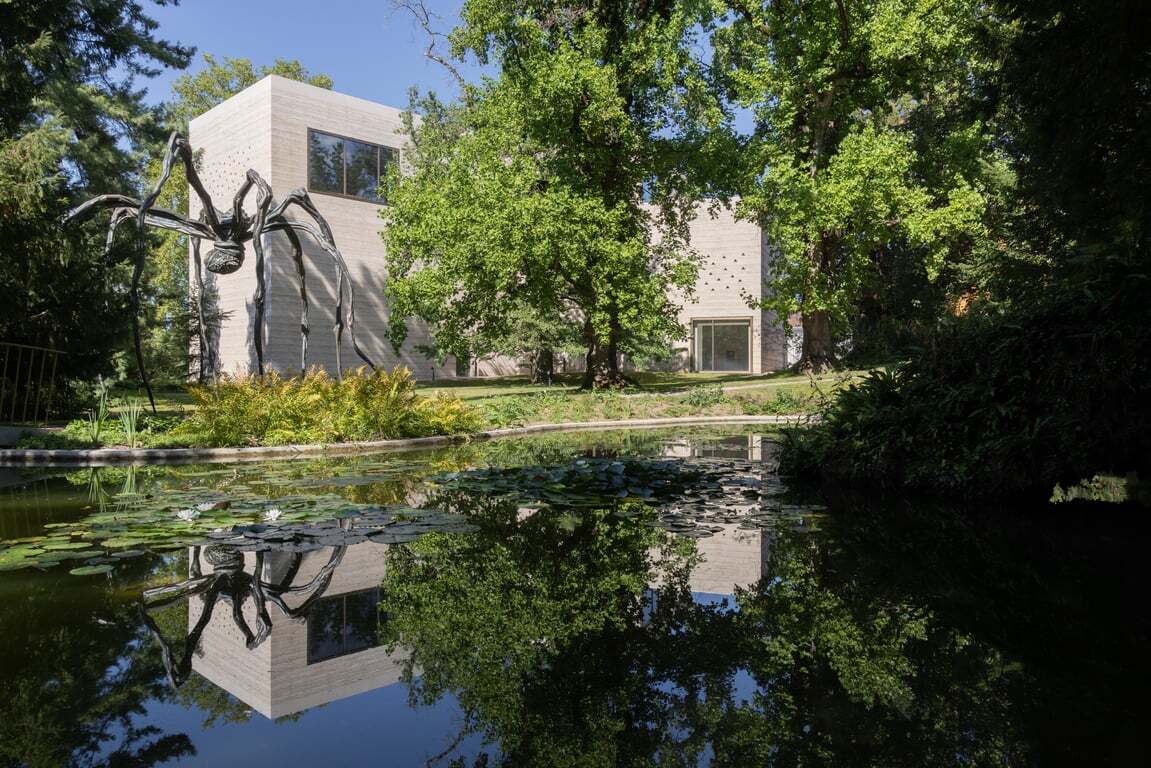
During the preliminary opening phase, which will run until 14 January 2027, visitors will be gradually introduced to the new spaces. The first to open will be the Wyss Museum: a monolithic exhibition building distinguished by a façade of rammed concrete incorporating locally sourced Jurassic limestone.
The museum is named after Swiss billionaire and philanthropist Hansjörg Wyss, the principal benefactor behind the ambitious expansion and Chairman of the Board of the Fondation Beyeler since 2009. Its Y-shaped plan was carefully conceived around the site’s century-old trees, with large windows framing panoramic views of the Black Forest and the Jura mountains.
The museum is named after Swiss billionaire and philanthropist Hansjörg Wyss, the principal benefactor behind the ambitious expansion and Chairman of the Board of the Fondation Beyeler since 2009. Its Y-shaped plan was carefully conceived around the site’s century-old trees, with large windows framing panoramic views of the Black Forest and the Jura mountains.
The second addition, the Ammann Pavilion, is a low-rise structure of glass and oak conceived as a versatile public space — a place for visitors to pause and unwind during the day — which transforms into a venue for concerts and performances in the evening. The pavilion takes its name from Thomas and Doris Ammann, the celebrated gallerists and art dealers whose close friendship with the Fondation Beyeler’s founder Ernst Beyeler is commemorated through the building’s dedication.
The final addition to open will be the Erlen Torhaus, a service building constructed in wood and glass and crowned by a light, seemingly floating roof. Its understated architecture recalls Zumthor’s own studio in the Alpine village of Haldenstein, in the eastern Swiss canton of Graubünden.
Together, the new additions will significantly reshape the Fondation Beyeler campus. Exhibition space will increase by approximately 1,500 square metres, while the formerly private Beyeler Park will nearly redouble in size and be opened to the public. The expansion will also give new purpose to the site’s existing structures, including a conservatory restored by India Mahdavi. These spaces will accommodate a music salon, artists’ studios, and an exhibition venue dedicated to experimental projects.
The opening of the new buildings will be accompanied by an ambitious programme of exhibitions. At its centre will be Constellations, a major presentation unfolding across the entire Fondation Beyeler campus from 26 September 2026 to 5 September 2027. Bringing together more than 200 works from the Fondation Beyeler collection and other private collections, the exhibition will create a dialogue between works spanning different periods and artistic positions.
Alongside Constellations, the programme will feature solo exhibitions dedicated to Ruth Asawa, Frida Kahlo, Louise Bourgeois, and Elizabeth Peyton.
The final addition to open will be the Erlen Torhaus, a service building constructed in wood and glass and crowned by a light, seemingly floating roof. Its understated architecture recalls Zumthor’s own studio in the Alpine village of Haldenstein, in the eastern Swiss canton of Graubünden.
Together, the new additions will significantly reshape the Fondation Beyeler campus. Exhibition space will increase by approximately 1,500 square metres, while the formerly private Beyeler Park will nearly redouble in size and be opened to the public. The expansion will also give new purpose to the site’s existing structures, including a conservatory restored by India Mahdavi. These spaces will accommodate a music salon, artists’ studios, and an exhibition venue dedicated to experimental projects.
The opening of the new buildings will be accompanied by an ambitious programme of exhibitions. At its centre will be Constellations, a major presentation unfolding across the entire Fondation Beyeler campus from 26 September 2026 to 5 September 2027. Bringing together more than 200 works from the Fondation Beyeler collection and other private collections, the exhibition will create a dialogue between works spanning different periods and artistic positions.
Alongside Constellations, the programme will feature solo exhibitions dedicated to Ruth Asawa, Frida Kahlo, Louise Bourgeois, and Elizabeth Peyton.
Cover: Wyss Museum © Photo: Mark Niedermann