
At the 61st Venice Biennale, the Swiss Pavilion presents The Unfinished Business of Living Together, a project that explores how media draw the boundaries of social norms and shape public recognition.
The exhibition is curated by Gianmaria Andreetta and Luca Beeler in collaboration with artists Miriam Laura Leonardi, Lithic Alliance, Yul Tomatala, and Nina Wakeford. Through new images and sound, their work reframes the media archive as a contested space where forms of social coexistence are continually negotiated.
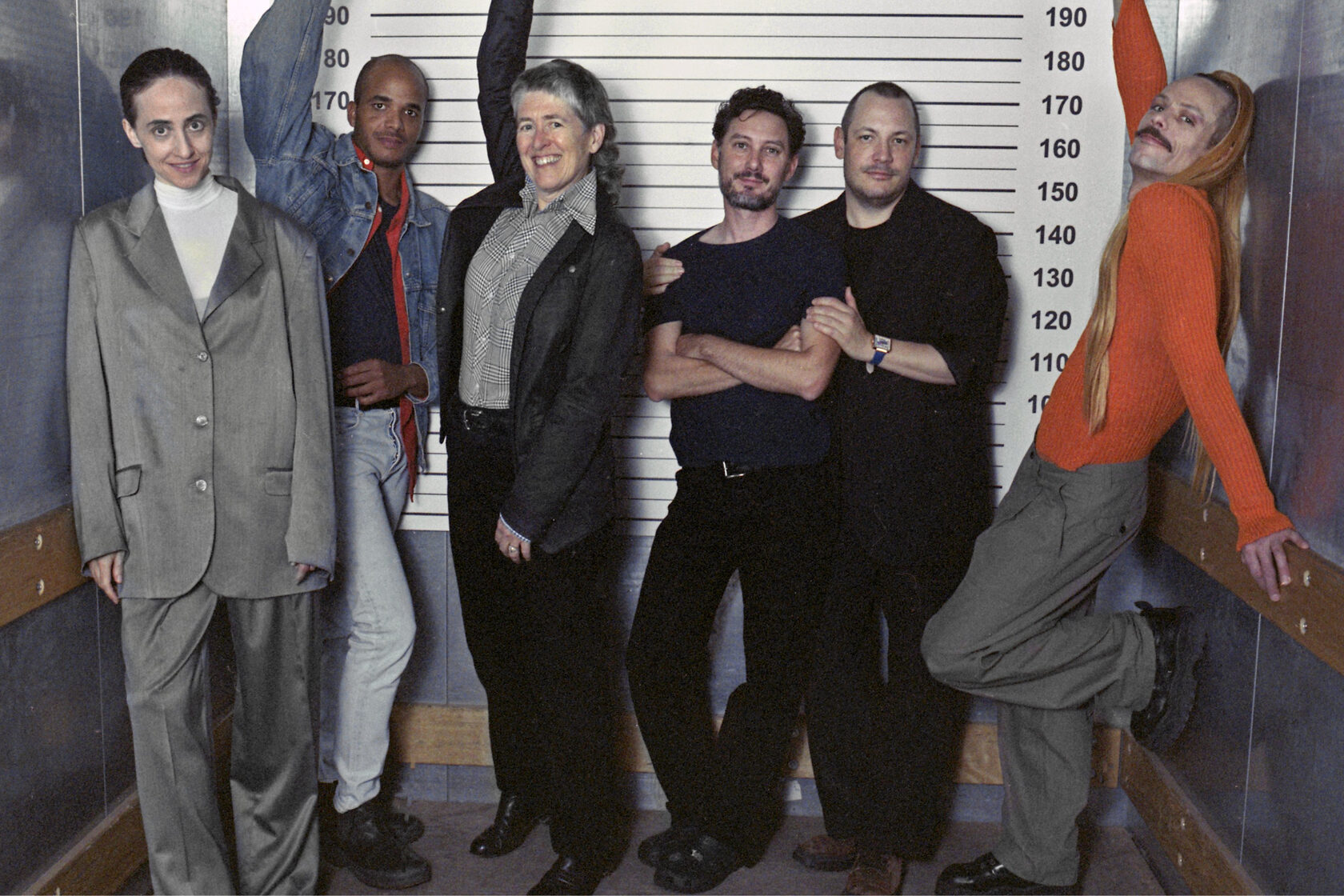
As the team explains: “We come from different language regions of Switzerland and beyond. Representing different generations and sharing international perspectives, we hope for a Pavilion that invites visitors to consider: When and where is this happening? Does the archive hold authority here? To whom does the past belong? Will viewers take a strong position?”
The exhibition takes as its starting point recordings from the popular television talk shows Telearena (1978) and Agora (1984), which for the first time gave homosexual people a public voice in mainstream media. Yet the debates extend beyond the question of sexuality alone, opening onto broader issues of state control and the nuclear family. Working with these archives, the project raises numerous questions about how public speech is shaped and limited by the media formats that carry it.
The exhibition takes as its starting point recordings from the popular television talk shows Telearena (1978) and Agora (1984), which for the first time gave homosexual people a public voice in mainstream media. Yet the debates extend beyond the question of sexuality alone, opening onto broader issues of state control and the nuclear family. Working with these archives, the project raises numerous questions about how public speech is shaped and limited by the media formats that carry it.

In this sense, the project resonates with the Biennale’s overarching theme, In Minor Keys, which draws particular attention to voices that are often lost in the noise of dominant narratives. The pavilion is realized with the support of Pro Helvetia, which, for the first time in its history, introduced a public call, attracting 140 submissions.
Several Swiss artists are also included in the main exhibition. Their presence is closely tied to the trajectory of the Biennale’s curator, Koyo Kouoh, whose work and personal history have long been connected to the Swiss art scene. During the 1990s, Kouoh was a regular at Zurich’s legendary Parfümerie club, where she even worked behind the counter. In the Arsenale, Dominique Rust and Clarissa Herbst revisit the memory of this iconic underground venue through a reconstruction of Herbst’s 1989 wall painting and archival photographs. In a nearby installation, Sandra Knecht explores the idea of Heimat (“homeland”) as something shaped by intimacy and lived experience, extending beyond geography and birthplace. Another Swiss artist, Uriel Orlow, presents two works in the Arsenale: the video installation Dedication, which traces the symbiotic communication between plants and fungi, and Holding the Mountain, a large drawing on tile, revealing how vetiver roots hold Himalayan ground amid the climate crisis.
Several Swiss artists are also included in the main exhibition. Their presence is closely tied to the trajectory of the Biennale’s curator, Koyo Kouoh, whose work and personal history have long been connected to the Swiss art scene. During the 1990s, Kouoh was a regular at Zurich’s legendary Parfümerie club, where she even worked behind the counter. In the Arsenale, Dominique Rust and Clarissa Herbst revisit the memory of this iconic underground venue through a reconstruction of Herbst’s 1989 wall painting and archival photographs. In a nearby installation, Sandra Knecht explores the idea of Heimat (“homeland”) as something shaped by intimacy and lived experience, extending beyond geography and birthplace. Another Swiss artist, Uriel Orlow, presents two works in the Arsenale: the video installation Dedication, which traces the symbiotic communication between plants and fungi, and Holding the Mountain, a large drawing on tile, revealing how vetiver roots hold Himalayan ground amid the climate crisis.
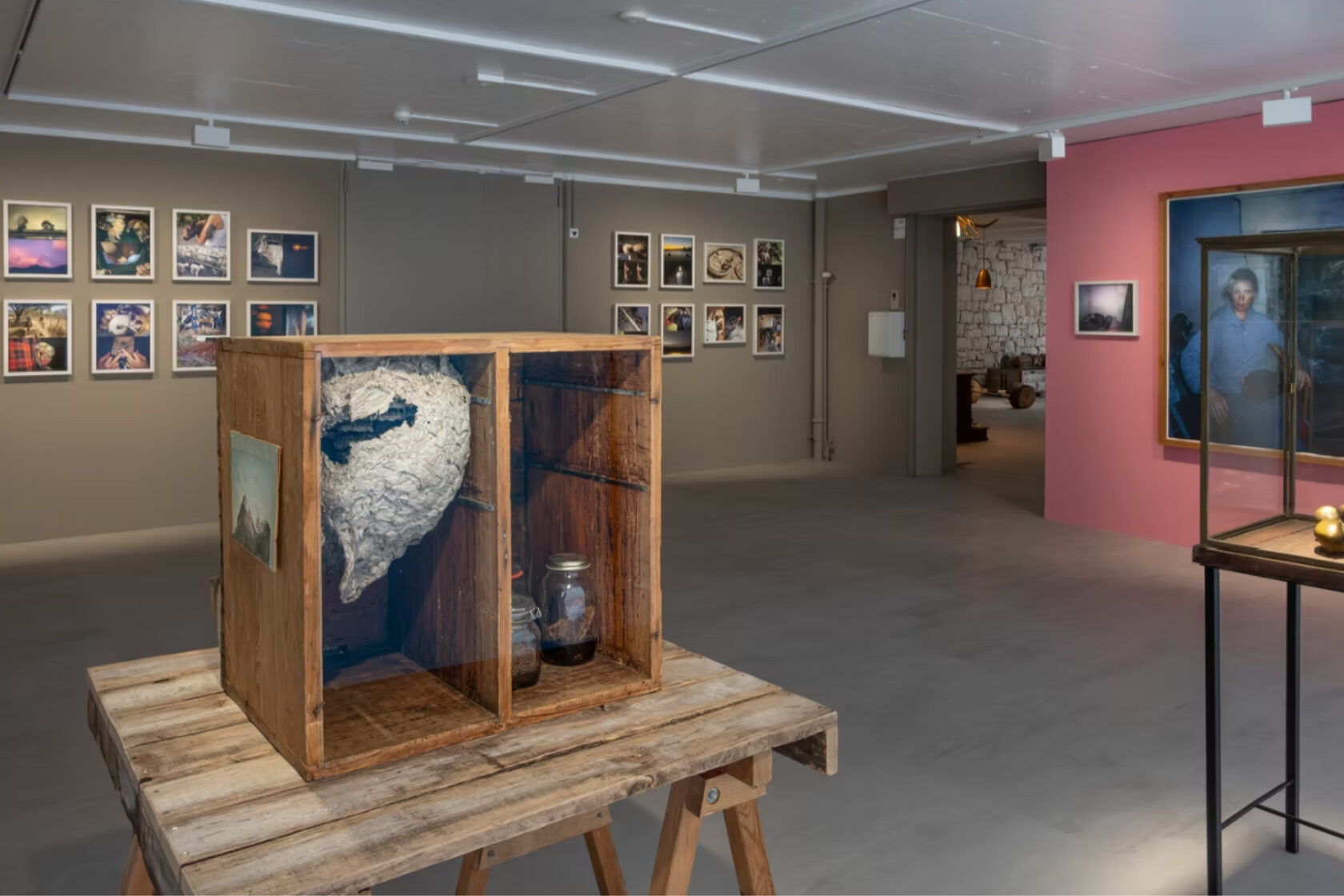
In the Central Pavilion at the Giardini, Sabian Baumann presents large-format drawings and clay sculptures in which the body and gender are examined as socially constructed categories. At Forte Marghera, Fabrice Aragno in his video installation Sentiments, Signs, Passions overturns the logic of the Godar’s film Le livre d’image by layering footage and projecting them simultaneously inside the former gunpowder warehouse.
Dates: 9 May — 22 November 2026
Venues: Swiss Pavilion — Giardini della Biennale
Main exhibition — Giardini della Biennale, Arsenale, Forte Marghera
Venues: Swiss Pavilion — Giardini della Biennale
Main exhibition — Giardini della Biennale, Arsenale, Forte Marghera
Collateral Programme
The Biennale’s collateral programme includes Spiral Economy. Charrière and Canova at the Museo Correr, where Franco-Swiss artist Julien Charrière enters into dialogue with the legacy of Antonio Canova, the Italian Neoclassical sculptor. Working across sculpture, video, photography, and sound, Charrière approaches marble as a material that bears the traces of geological time and as a starting point for a conversation about ecology.

Dates: 30 April — 22 November 2026
Venue: Museo Correr, Piazza San Marco, Venice
Venue: Museo Correr, Piazza San Marco, Venice

On 9 May, the Biennale’s opening day, Swiss artist Hannah Weinberger presented the performance Fort Sant’Andrea — A Tidal Listening on the island of Sant’Andrea in the Venetian lagoon. Around fifty acoustic channels distributed across the island generated a layered sonic field of voices and environmental recordings. Visitors were invited to move freely through the fort, which for several hours became a space of collective attention to water, time, and the memory of place. The performance was organised with the support of the Centre d’Art Contemporain Genève.
Contributor: Iuliia Egorova
Cover: Pavilion of Switzerland at the Biennale Arte 2026, The Unfinished Business of Living Together © Photo: Christian Beutler — Keystone