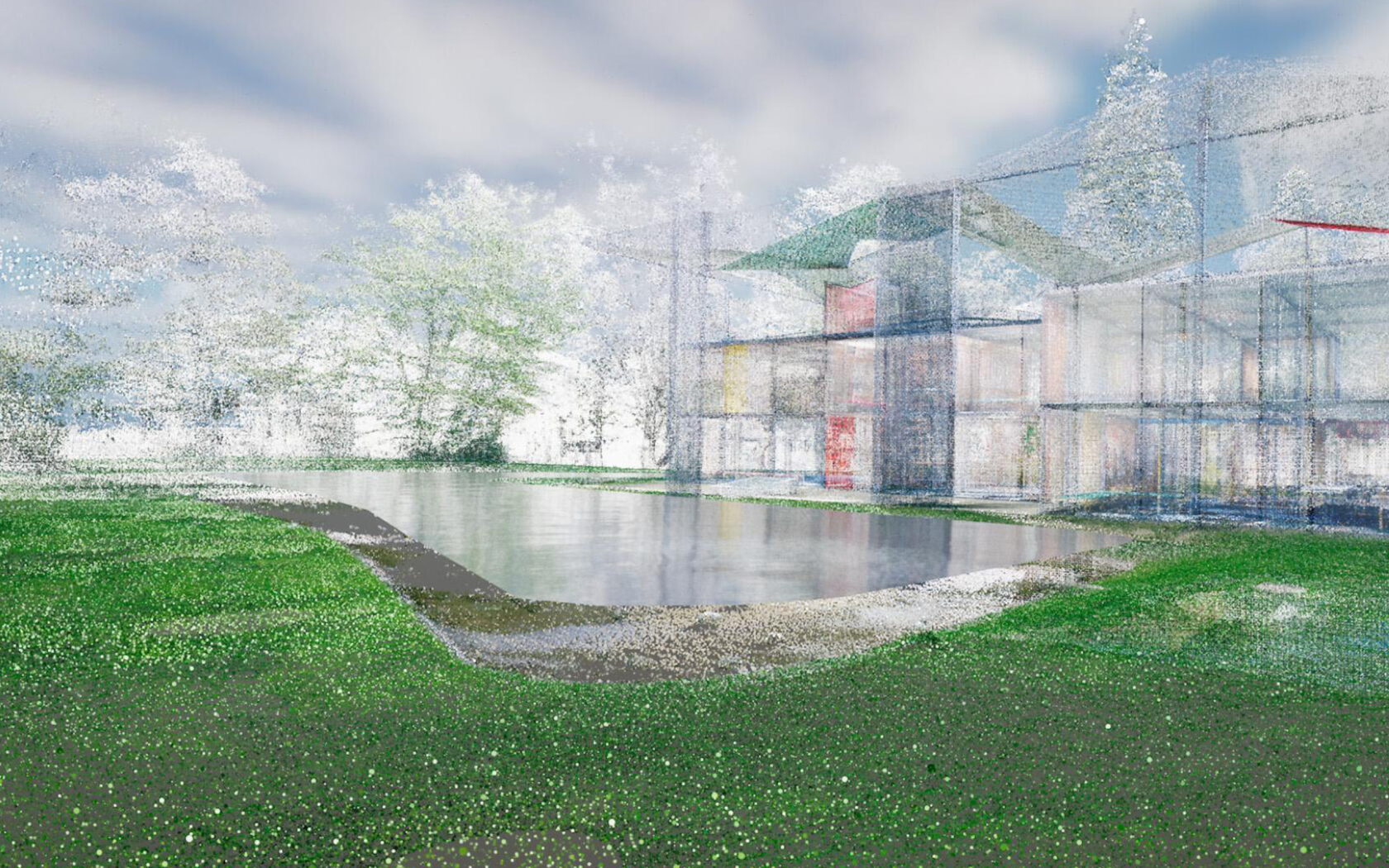
Redefining the museum experience through 17 digital groundbreaking experiments, the Museum für Gestaltung Zürich presents its innovative exhibition Museum of the Future, transforming conventional museum visits into cutting-edge explorations.
While numerous priceless artifacts remain hidden from public view due to their delicate nature or strict conservation requirements, this exhibition reveals how next-generation digital solutions are opening new doors to these treasures, shaping the future of museum engagement. The exhibition delves into the transformative potential of digitalization and AI for future museums, presenting 17 innovative experiments that turn the gallery into a futuristic laboratory featuring the most extensive digital image ever created.
The exhibition’s central focus lies in the realm of artificial intelligence exploration.The TRUSTAI installation offers a fascinating encounter between visitors and their digital counterparts, while other projects showcase AI’s potential in deciphering ancient scrolls from Pompeii and Renaissance letters.
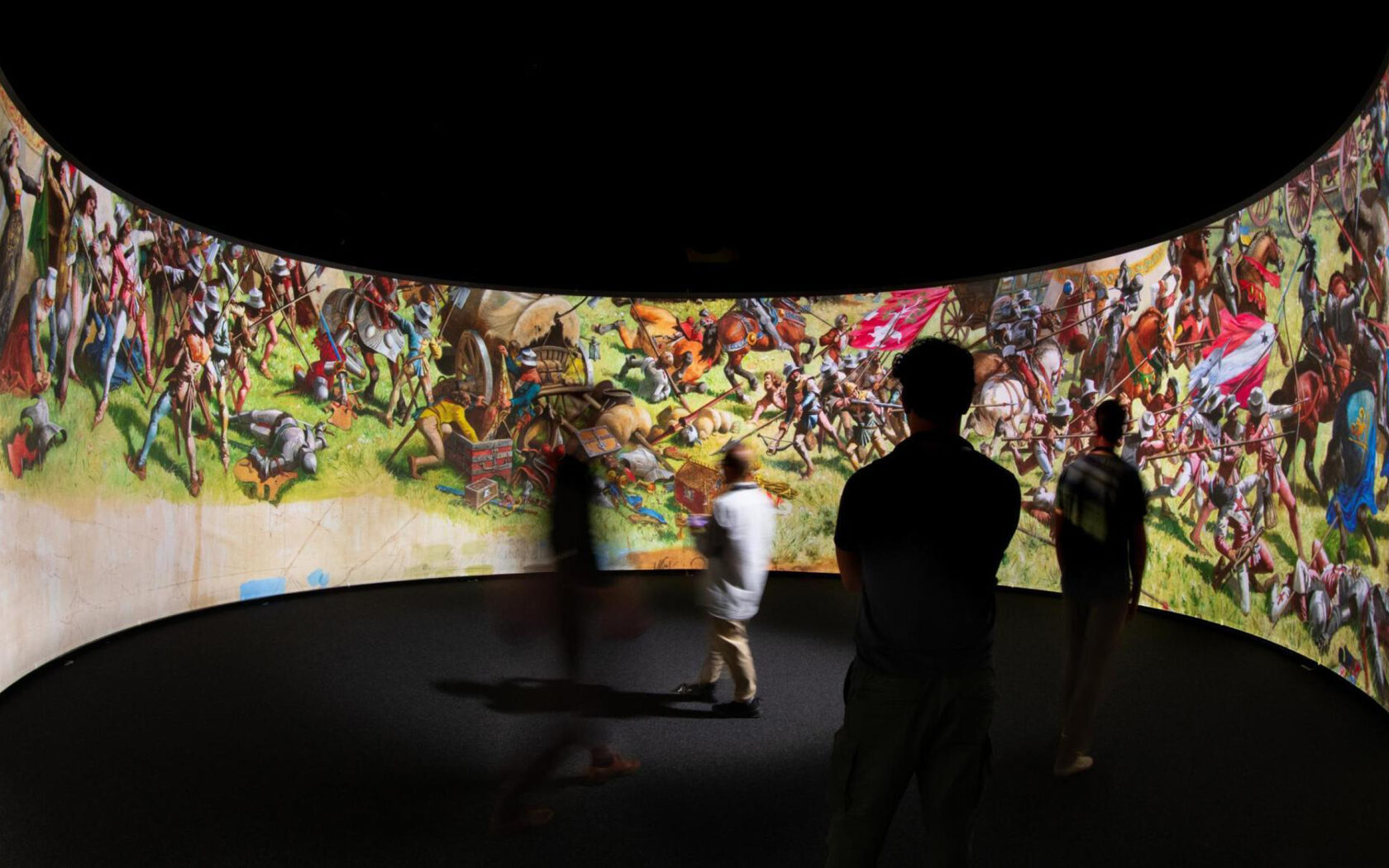
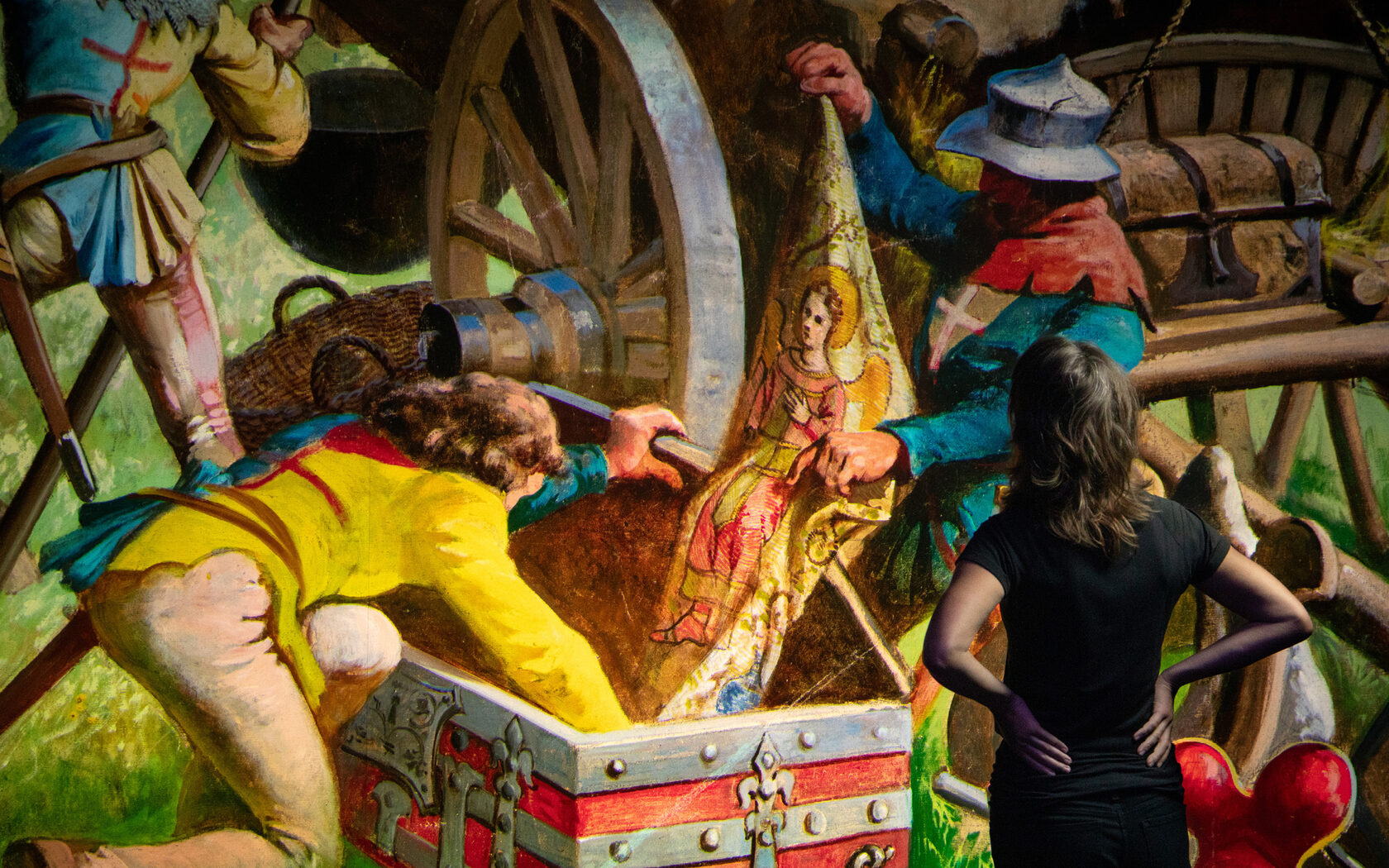
One of the highlights is the digital panorama of The Battle of Murten, featuring an unprecedented 1.6 trillion pixels — the largest digital image of any object in the world. This technological marvel allows visitors to explore every detail of the monumental 360-degree painting.
The exhibition’s central focus lies in the realm of artificial intelligence exploration.The TRUSTAI installation offers a fascinating encounter between visitors and their digital counterparts, while other projects showcase AI’s potential in deciphering ancient scrolls from Pompeii and Renaissance letters.
One of the highlights is the digital panorama of The Battle of Murten, featuring an unprecedented 1.6 trillion pixels — the largest digital image of any object in the world. This technological marvel allows visitors to explore every detail of the monumental 360-degree painting.
The exhibition also explores digital reconstruction through projects like Double Truth II, which brings virtual sculptures to life, and innovative recreations of delicate artworks that cannot be physically displayed. Visitors can even interact with virtual marionettes created by Sophie Taeuber-Arp, bringing these delicate historical pieces to life in a safe digital environment.
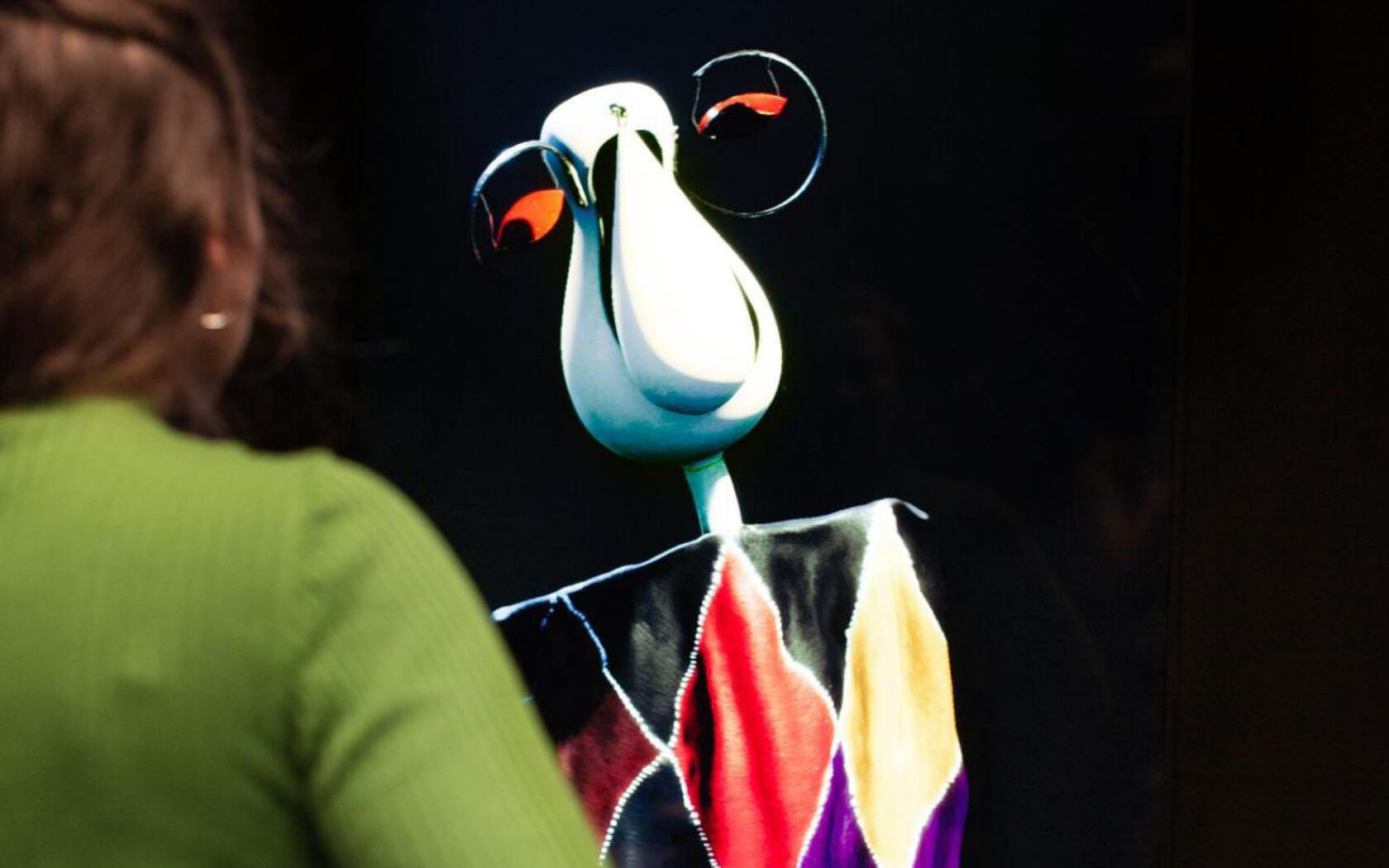
A unique dialogue section allows visitors to converse with digitized puppets powered by large language models, creating an unexpected blend of tradition and technology. The exhibition also features collaborations with international designers from six continents, demonstrating how digital technologies can offer new perspectives on traditional collections.
This ambitious project is the outcome of a multi-year research collaboration sponsored by the Digitalization Initiative of the Zurich Higher Education Institutions DIZH and involving the project partners Museum für Gestaltung Zürich, the Laboratory for Experimental Museology, eM+ at EPFL Lausanne, the Zurich University of the Arts (ZHdK), the Natural History Museum of the University of Zurich, and ETH Zurich. The exhibition marks a significant milestone in the evolution of museums, proving that the future of cultural institutions lies at the intersection of tradition and technological innovation.
This ambitious project is the outcome of a multi-year research collaboration sponsored by the Digitalization Initiative of the Zurich Higher Education Institutions DIZH and involving the project partners Museum für Gestaltung Zürich, the Laboratory for Experimental Museology, eM+ at EPFL Lausanne, the Zurich University of the Arts (ZHdK), the Natural History Museum of the University of Zurich, and ETH Zurich. The exhibition marks a significant milestone in the evolution of museums, proving that the future of cultural institutions lies at the intersection of tradition and technological innovation.
You can find out more by visiting the website.
Dates: 29 August 2025 — 2 February 2026
Location: The Museum für Gestaltung Zürich, Ausstellungsstrasse 60
Dates: 29 August 2025 — 2 February 2026
Location: The Museum für Gestaltung Zürich, Ausstellungsstrasse 60
Contributor: Maria Efimova
Cover photo: The digital reconstruction of the Pavillon Le Corbusier © Photo: Visualization and MultiMedia Lab, Institute for Information, University of Zurich