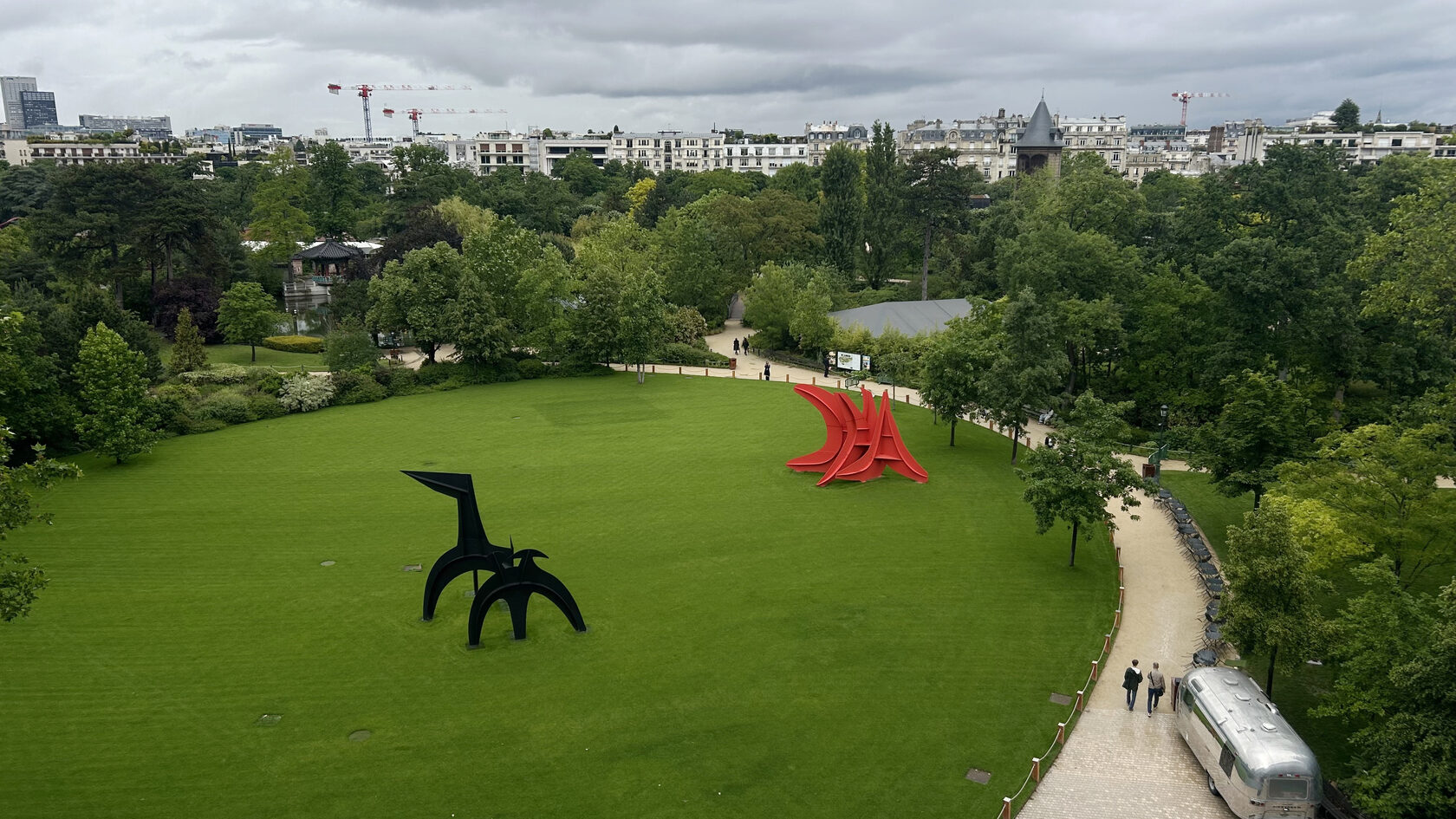
PARIS — Floating beneath the glass sails of Frank Gehry’s architecture, Alexander Calder’s suspended forms seem less installed than released into space. On view at the Fondation Louis Vuitton from April 15 through August 16, 2026, Calder. Rêver en équilibre (Calder. Dreaming in Balance) marks both the centenary of the artist’s arrival in France in 1926 and fifty years since his death. Special report by curator and art consultant Daria Solignac.
Conceived in close collaboration with the Calder Foundation — the exhibition’s principal lender — and with the Whitney Museum of American Art, the retrospective brings together nearly 300 works spanning five decades, from the legendary Cirque Calder and wire portraits to mobiles, stabiles, paintings, jewelry, archival films, and mon
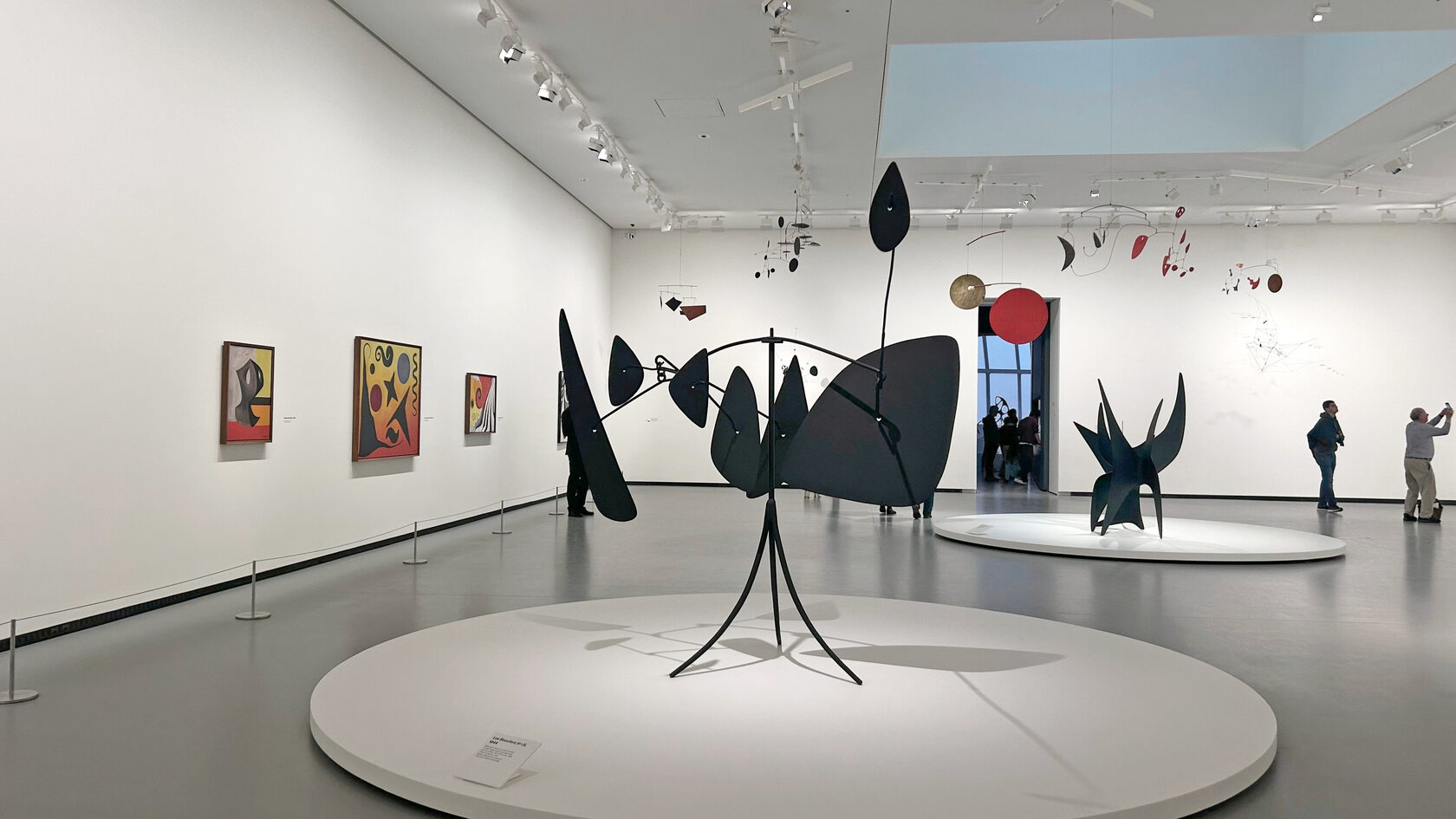
Curated by Suzanne Pagé, Dieter Buchhart, and Anna Karina Hofbauer, the exhibition avoids presenting Calder merely as the “inventor of the mobile,” a simplification that has long been reducing the complexity of his practice. Instead, the retrospective positions him as an artist fundamentally concerned with movement, duration, gravity, participation, performance, and the unstable relations between matter and life itself.
An Animated Line
What becomes immediately evident throughout the exhibition is the remarkable continuity of Calder's visual language. The monumental stabiles of the later decades already exist, in embryonic form, in the toys and animal sketches he made as a child. In the early rooms, one encounters drawings and handmade figures composed with astonishing economy of means: a few lines capturing the movement of an animal body, the tension of a neck, the leap of an acrobat. The line itself already behaves dynamically. It bends, stretches, balances, and animates space long before Calder's abstraction fully emerges.
What becomes immediately evident throughout the exhibition is the remarkable continuity of Calder's visual language. The monumental stabiles of the later decades already exist, in embryonic form, in the toys and animal sketches he made as a child. In the early rooms, one encounters drawings and handmade figures composed with astonishing economy of means: a few lines capturing the movement of an animal body, the tension of a neck, the leap of an acrobat. The line itself already behaves dynamically. It bends, stretches, balances, and animates space long before Calder's abstraction fully emerges.
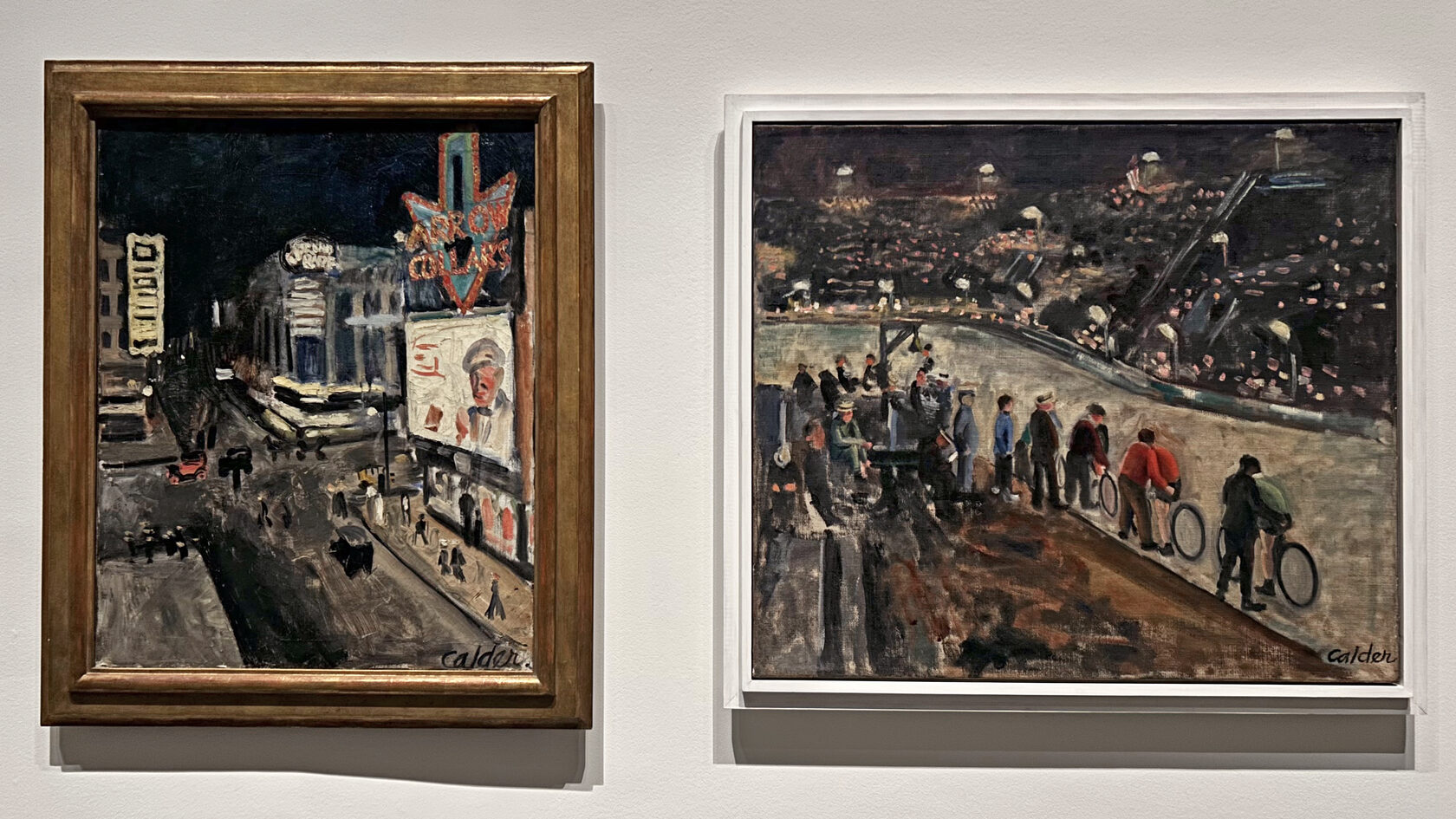
This sensitivity to movement deepened during his years at the Art Students League in New York, where Calder studied drawing and painting since 1923. Influenced by artists associated with the Ashcan School, including John Sloan and George Luks, he became fascinated by the spectacle of modern urban life: crowds, machines, electric lights, traffic, and the energy of Manhattan itself. Lacking a permanent studio, Calder often worked directly outdoors, hanging canvases from fences or posts. The city became both subject and environment.
Circus and Spectacle
The exhibition thoughtfully emphasizes this early fascination with modern spectacle. Circus, theater, dance, cinema, and urban velocity had permeated Calder's imagination long before the mobiles appeared. In this regard, the dialogue established with Pablo Picasso proves particularly illuminating. Picasso arrived ahead of the opening of Calder's 1931 exhibition at the Galerie Percier — Volumes, Vecteurs, Densités, where Calder showed his first wholly abstract works — to preview it privately — and introduced himself to the younger artist. The following February, at the Galerie Vignon, Calder presented ses mobiles: the first entirely kinetic exhibition in the history of Western art. Both artists shared a fascination with circus performers and acrobats — bodies suspended between balance and collapse, between discipline and improvisation.
The exhibition thoughtfully emphasizes this early fascination with modern spectacle. Circus, theater, dance, cinema, and urban velocity had permeated Calder's imagination long before the mobiles appeared. In this regard, the dialogue established with Pablo Picasso proves particularly illuminating. Picasso arrived ahead of the opening of Calder's 1931 exhibition at the Galerie Percier — Volumes, Vecteurs, Densités, where Calder showed his first wholly abstract works — to preview it privately — and introduced himself to the younger artist. The following February, at the Galerie Vignon, Calder presented ses mobiles: the first entirely kinetic exhibition in the history of Western art. Both artists shared a fascination with circus performers and acrobats — bodies suspended between balance and collapse, between discipline and improvisation.
Yet where Picasso fragmented the body pictorially, Calder activated it spatially.
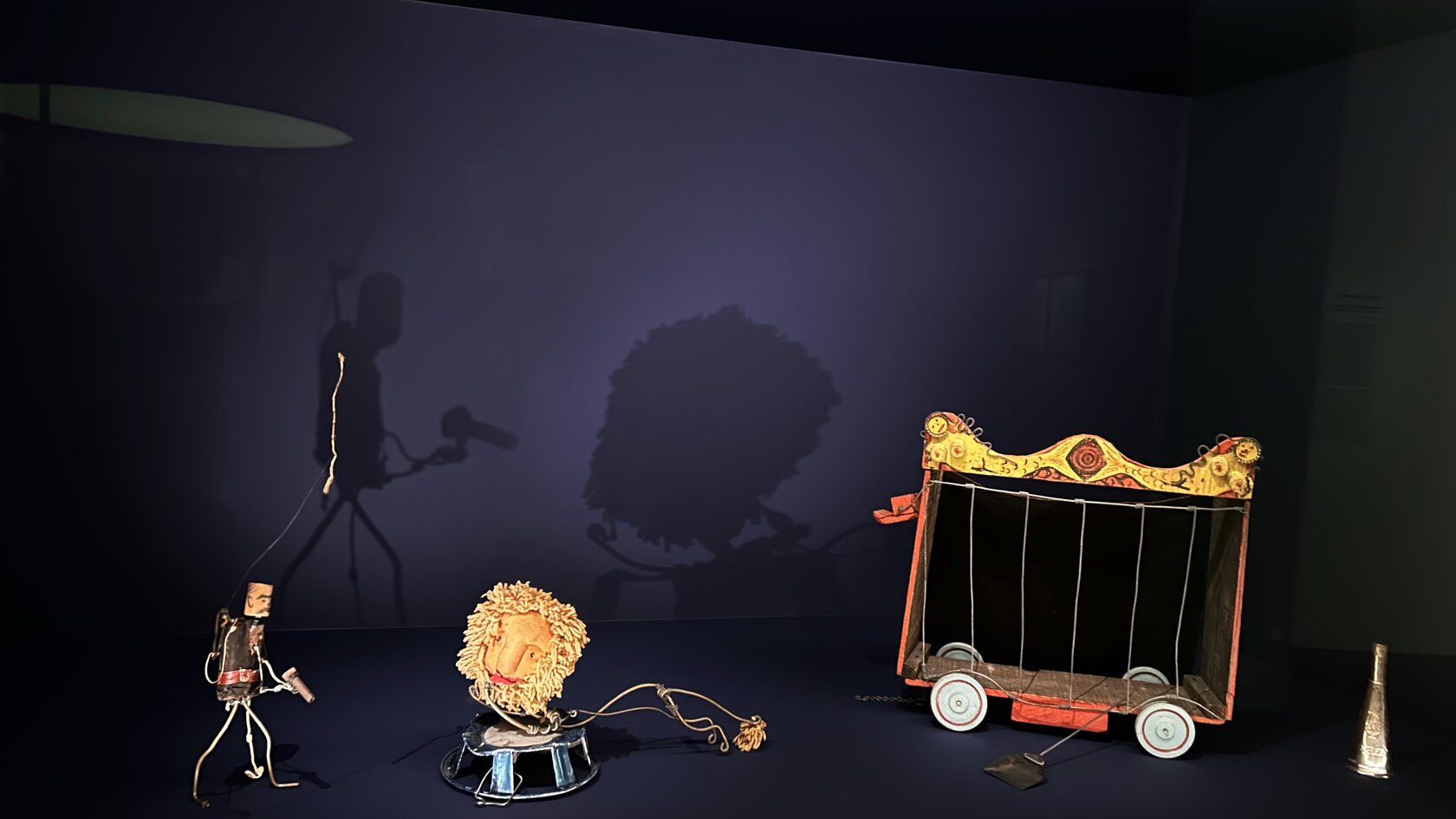
At the emotional and conceptual center of the exhibition stands the Cirque Calder, exceptionally loaned by the Whitney Museum of American Art. Begun shortly after Calder's arrival in Paris in 1926 and first performed there that year, the miniature circus reveals itself not simply as a sculpture but as an early form of performance art. Composed of wire, cork, fabric, wood, string, bottle caps, and found materials, the circus was animated directly by Calder himself before audiences that included Fernand Léger, Joan Miró, Le Corbusier, and Piet Mondrian. Watching archival footage of Calder manipulating tiny acrobats, horses, clowns, and performers, one realizes that these works are governed by extraordinary mechanical precision. Every leap, swing, collapse, and balancing act follows intricate systems of gravity, tension, release, and counterweight. What appears playful is in fact deeply calculated, and this tension between engineering and spontaneity would remain central throughout his career.
At the emotional and conceptual center of the exhibition stands the Cirque Calder, exceptionally loaned by the Whitney Museum of American Art. Begun shortly after Calder's arrival in Paris in 1926 and first performed there that year, the miniature circus reveals itself not simply as a sculpture but as an early form of performance art. Composed of wire, cork, fabric, wood, string, bottle caps, and found materials, the circus was animated directly by Calder himself before audiences that included Fernand Léger, Joan Miró, Le Corbusier, and Piet Mondrian. Watching archival footage of Calder manipulating tiny acrobats, horses, clowns, and performers, one realizes that these works are governed by extraordinary mechanical precision. Every leap, swing, collapse, and balancing act follows intricate systems of gravity, tension, release, and counterweight. What appears playful is in fact deeply calculated, and this tension between engineering and spontaneity would remain central throughout his career.
The Turn to Abstraction
The turn from this figurative theater toward abstraction can be dated almost to a single afternoon. In October 1930, Calder visited Mondrian's Paris studio and found a wall hung with movable rectangles of colored cardboard, which the Dutch painter repositioned for his compositional experiments. Calder was struck less by the geometry than by the wish to set it in motion. Within a few years the impulse had produced an art with no precedent: abstraction that did not depict movement but performed it.
The turn from this figurative theater toward abstraction can be dated almost to a single afternoon. In October 1930, Calder visited Mondrian's Paris studio and found a wall hung with movable rectangles of colored cardboard, which the Dutch painter repositioned for his compositional experiments. Calder was struck less by the geometry than by the wish to set it in motion. Within a few years the impulse had produced an art with no precedent: abstraction that did not depict movement but performed it.
Monument and Ornament
Even the monumental outdoor works installed on the Fondation's grounds — the first time the institution has given its adjoining lawn over to a single artist — retain something strangely alive.. Their curved profiles and precarious balances echo the animal sketches and wire figures Calder created as a boy. Despite their industrial scale, the sculptures possess a remarkable sense of elasticity, as though caught in the middle of a movement. One senses suspended tension, counterweight, and latent movement even when the sculptures remain physically still. The animated line of Calder's youth never disappears; it simply expands into space and architecture.
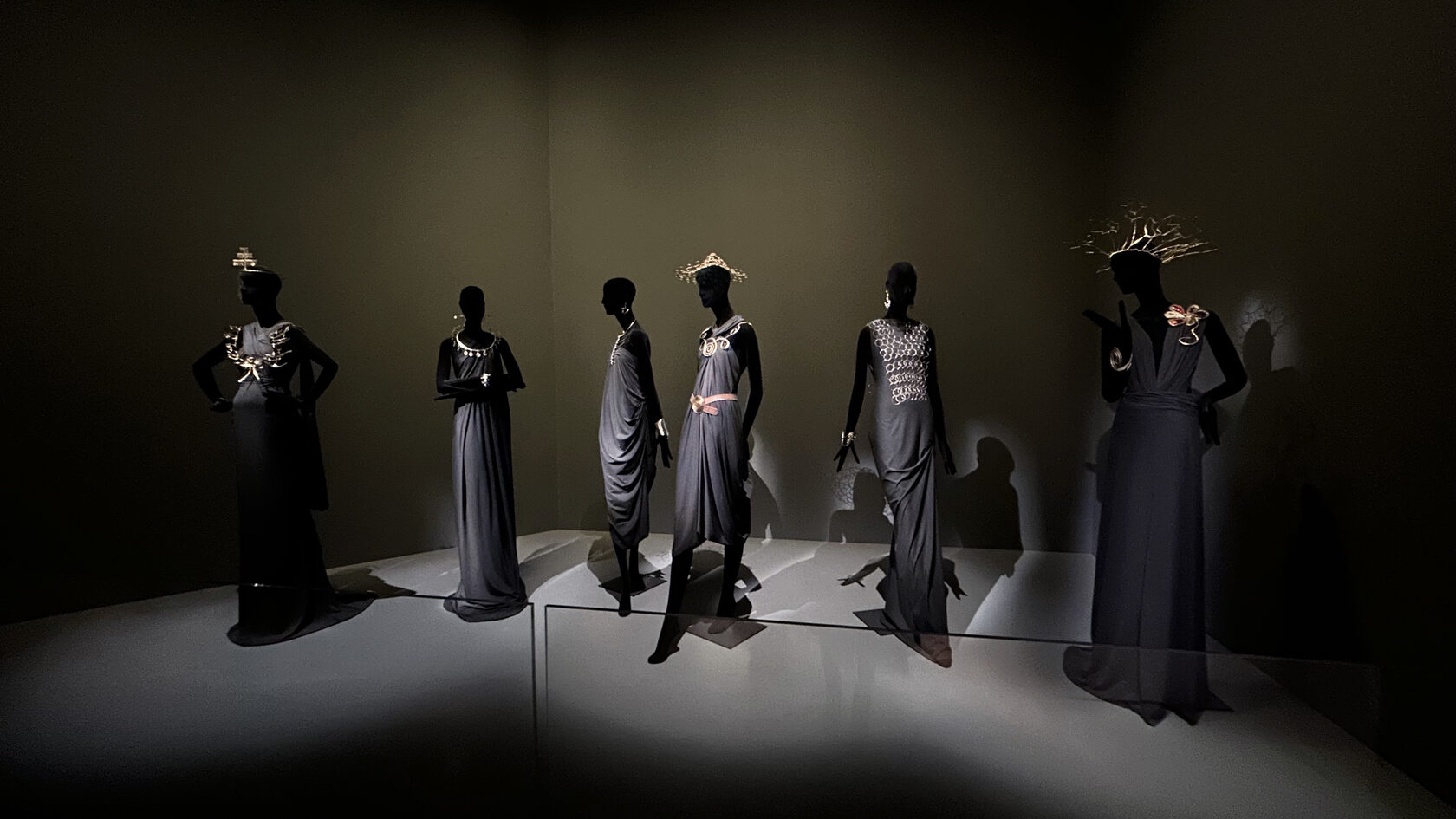
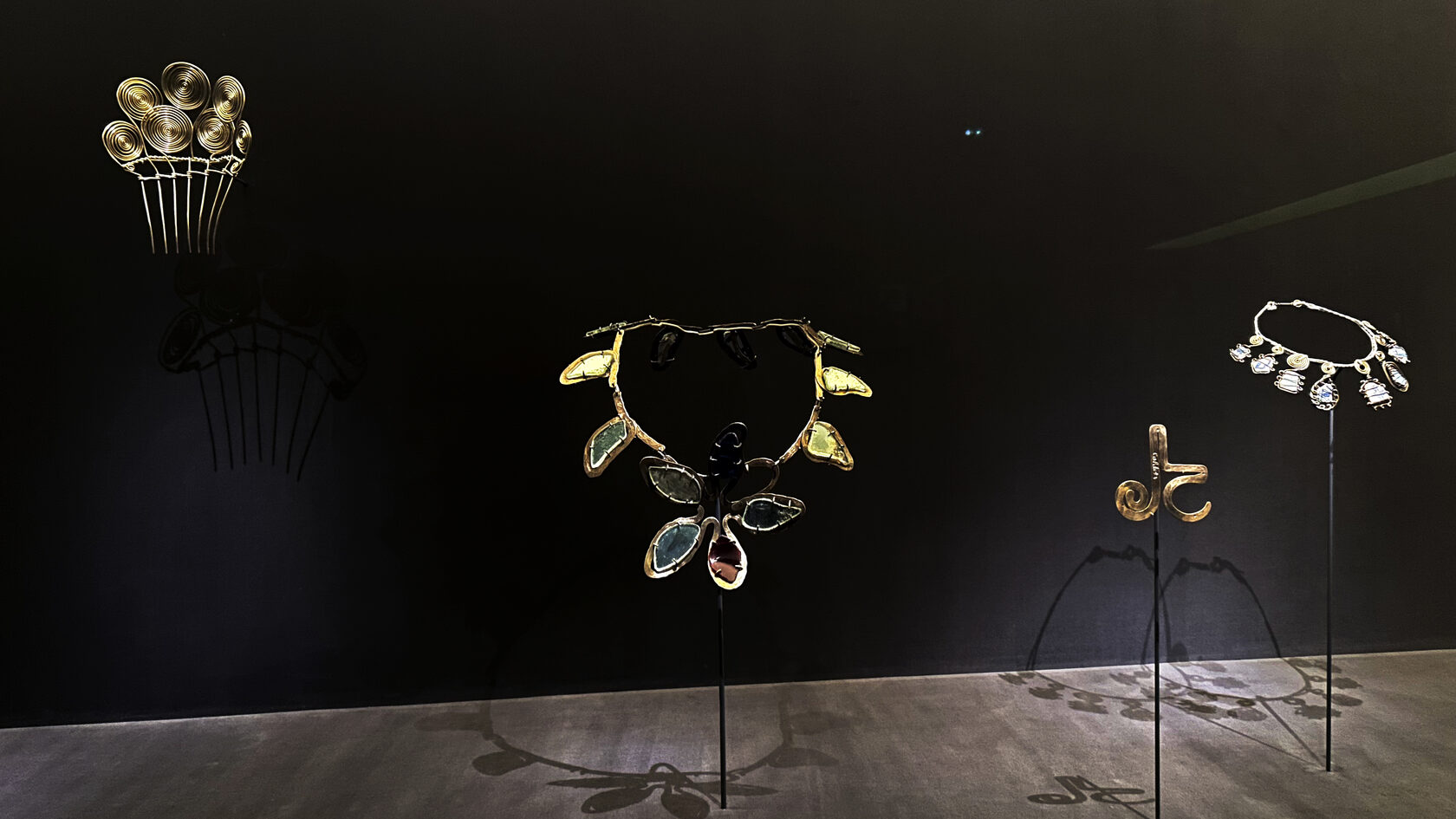
Another remarkable section of the exhibition focuses on Calder's jewelry, presented not as decorative side production but as an extension of his sculptural thinking. Made primarily for friends and for his wife Louisa, these wearable works adapt Calder's visual language to an intimate scale. Twisted brass, silver, copper, and wire become miniature compositions of line, balance, and movement — almost like mobiles condensed onto the body. If the monumental stabiles activate architecture and public space, the jewelry activates gesture itself. The wearer becomes part of the sculpture's choreography. Seen alongside the larger works, these pieces reveal the extraordinary consistency of Calder's imagination: whether working with steel on a monumental scale or bending a thin metal wire into an earring, he remained fundamentally concerned with rhythm, tension, balance, and the animation of form.
Air as Material
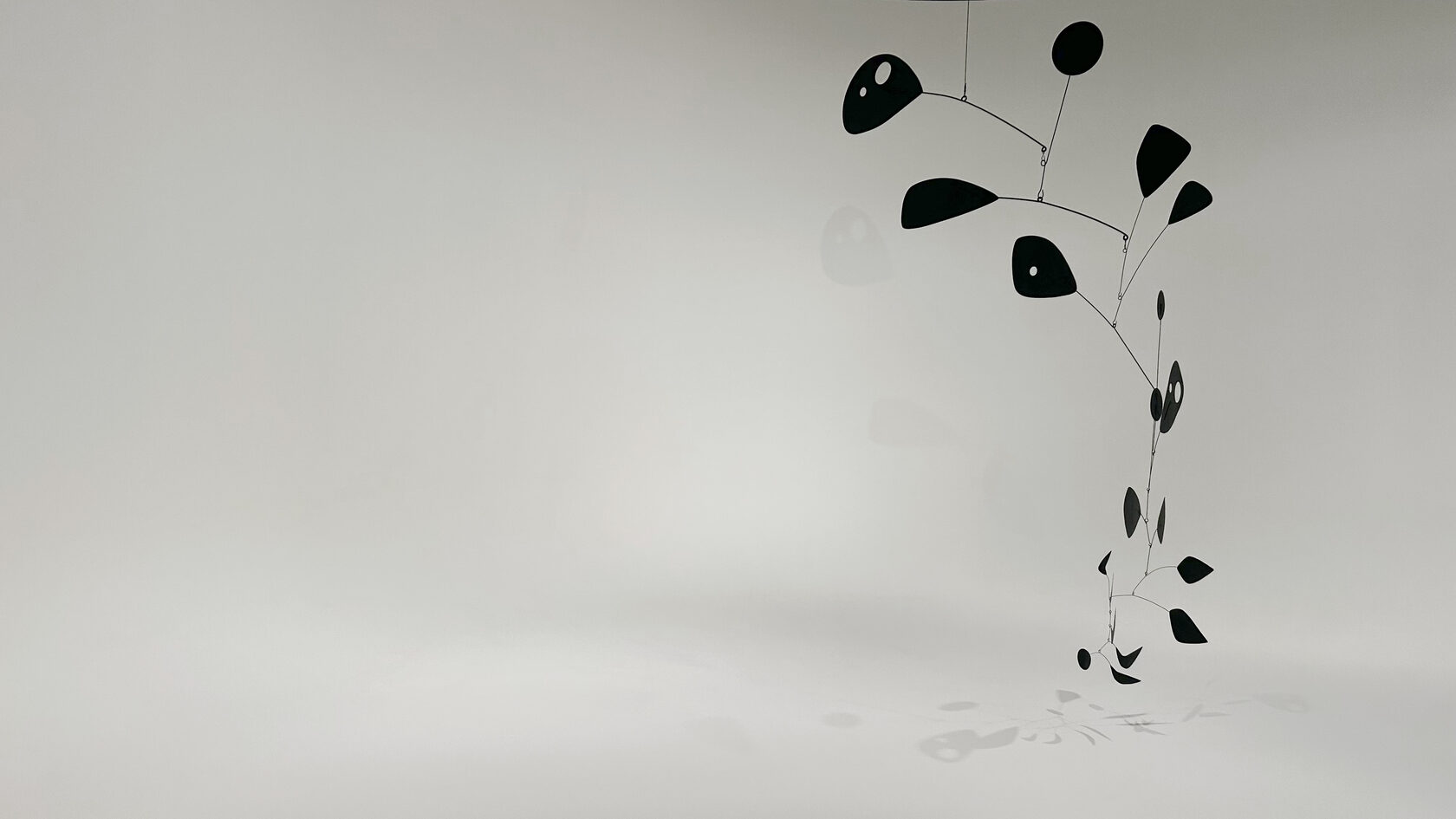
The exhibition repeatedly returns to the idea that Calder did not imitate nature but allowed nature itself to participate in the work. Wind, gravity, air currents, light, and human presence activate the sculptures continuously. Standing beneath the mobiles suspended within Gehry's vast galleries, one becomes acutely aware not only of objects but of invisible forces made perceptible. Air itself becomes material.
The exhibition repeatedly returns to the idea that Calder did not imitate nature but allowed nature itself to participate in the work. Wind, gravity, air currents, light, and human presence activate the sculptures continuously. Standing beneath the mobiles suspended within Gehry's vast galleries, one becomes acutely aware not only of objects but of invisible forces made perceptible. Air itself becomes material.
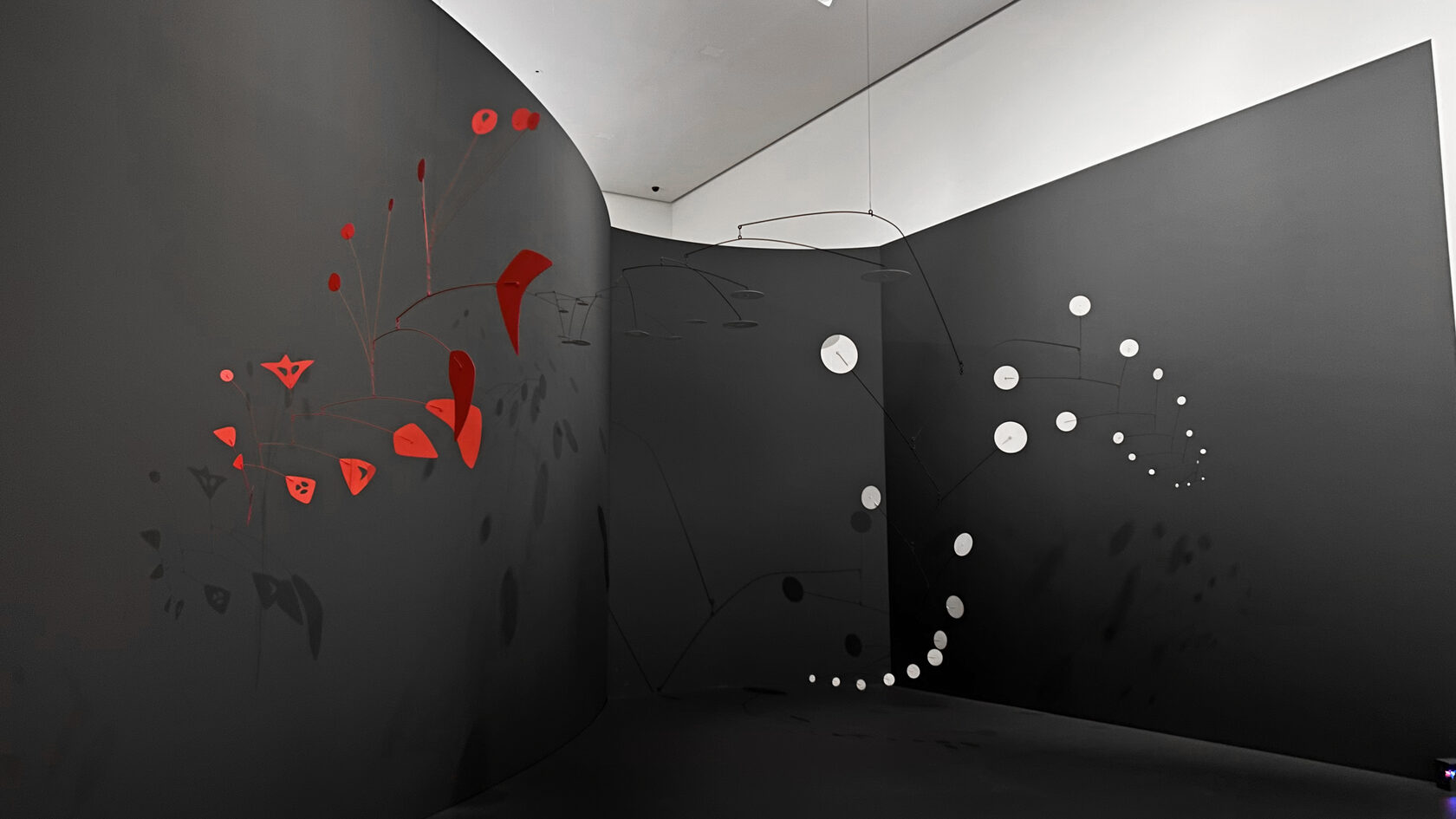
Jean-Paul Sartre caught this quality in the essay he wrote for Calder's 1946 exhibition at the Galerie Louis Carré, Les Mobiles de Calder, first translated into English for ARTnews in 1947. Sartre understood that the works do not so much occupy space as behave within it: they drift, hesitate, oscillate, and respond. Sometimes, he noted, Calder amused himself by imitating natural forms — he had been given "a bird of paradise with wings of iron," which needed only a little warm air rising from the window, rubbing against it, to clank and straighten and wheel slowly on its axis. The mobiles imitated nothing, Sartre concluded, and yet behaved as symbols of nature: its wasted pollen, its sudden flights of butterflies, and its blind chains of cause and effect.
Eighty years later, beneath the glass sails, the visitor completes the same circuit. Lean close to one of the suspended planes, let a breath cross it, and the work begins its slow negotiation with the moving air — the wrought-iron bird of Sartre's windowsill, reanimated in a museum built of wind and light. The participation Calder designed for is not metaphorical. It happens in the room, with the breath, in real time.
Eighty years later, beneath the glass sails, the visitor completes the same circuit. Lean close to one of the suspended planes, let a breath cross it, and the work begins its slow negotiation with the moving air — the wrought-iron bird of Sartre's windowsill, reanimated in a museum built of wind and light. The participation Calder designed for is not metaphorical. It happens in the room, with the breath, in real time.
Dreaming in Balance
This aspect of Calder's work feels strikingly contemporary. Long before systems theory or interactive environments entered artistic discourse, he had already built sculpture as a set of relations held in suspension — between object and atmosphere, balance and uncertainty, engineering and improvisation. The vocabulary arrived decades later; the works were already operating by its logic.
The exhibition's subtitle, Rêver en équilibre ("Dreaming in Balance"), ultimately captures this condition precisely. Calder's universe is one of perpetual negotiation: between precision and chance, monumentality and fragility, abstraction and life.
Perhaps this is why the retrospective feels unexpectedly touching. Across five decades of increasingly ambitious experimentation, one still senses the presence of the young boy constructing toys from scraps of metal and drawing animals in motion with a few rapid lines. The materials evolve from wire to steel, from toy to sculpture, but the impulse remains remarkably constant: to give visible form to the invisible forces that animate the world.
Cover: Installation view of the exhibition Calder. Rêver en équilibre © Photo: Daria Solignac