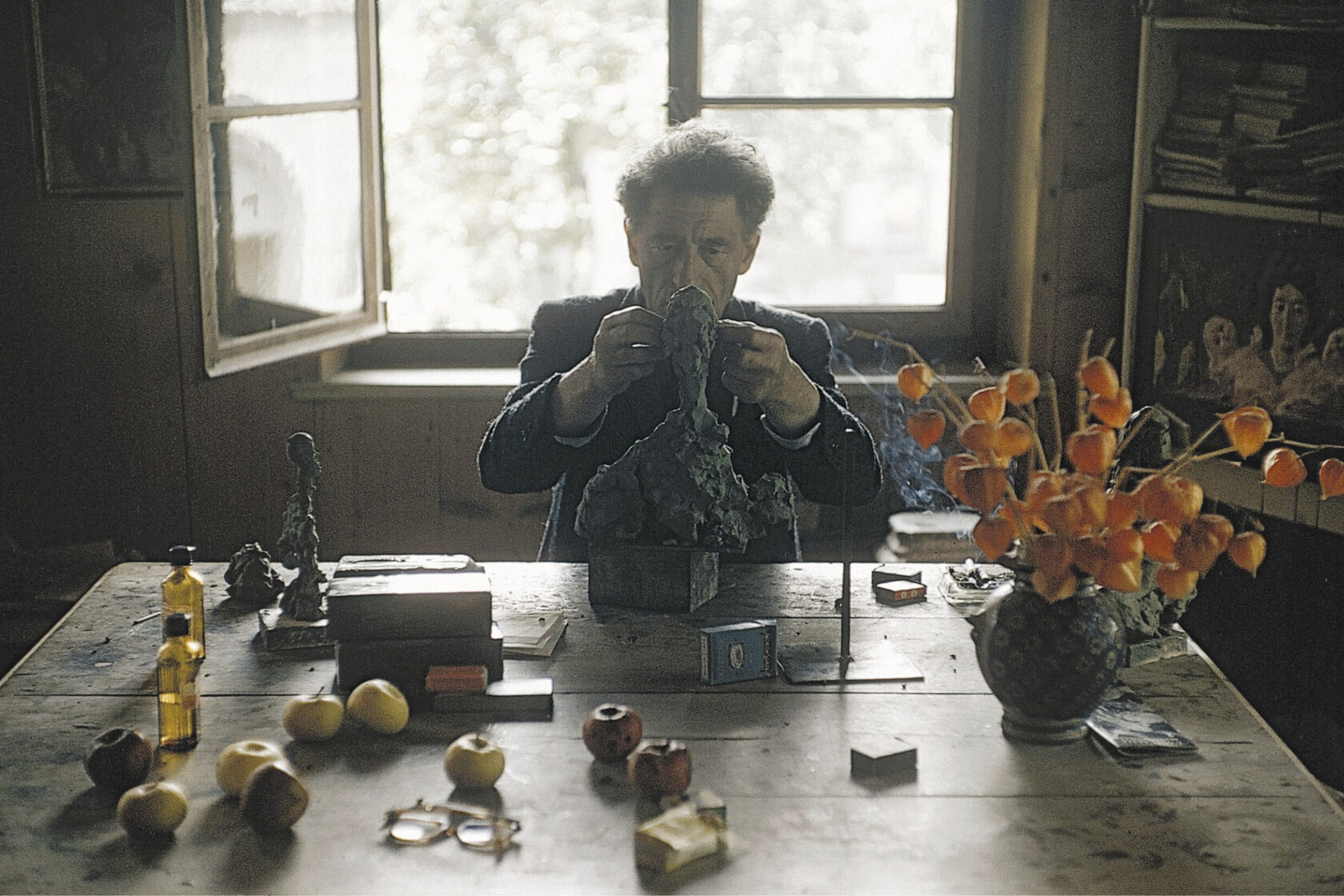
Hauser & Wirth’s St. Moritz gallery presents Alberto Giacometti. Faces and Landscapes of Home, curated by Tobia Bezzola. The show reveals a seldom‑seen dimension of the artist’s deeply personal universe — his family and the alpine landscapes of Stampa and Maloja in the Bregaglia Valley, places he continually revisited throughout his life.
Giacometti’s artistic identity was shaped by two contrasting worlds: the serene mountain valley of his Swiss childhood and the vibrant energy of Paris. Born in 1901 to Annetta and Giovanni Giacometti, a celebrated painter known for luminous Alpine scenes, Alberto grew up surrounded by art. His early works from 1918–1920s reveal a deep fascination with human forms and local landscapes. He created tender sketches of his parents, alongside austere yet intimate drawings of the surrounding mountains — subjects that would remain his constant source of inspiration.
Giacometti’s artistic identity was shaped by two contrasting worlds: the serene mountain valley of his Swiss childhood and the vibrant energy of Paris. Born in 1901 to Annetta and Giovanni Giacometti, a celebrated painter known for luminous Alpine scenes, Alberto grew up surrounded by art. His early works from 1918–1920s reveal a deep fascination with human forms and local landscapes. He created tender sketches of his parents, alongside austere yet intimate drawings of the surrounding mountains — subjects that would remain his constant source of inspiration.
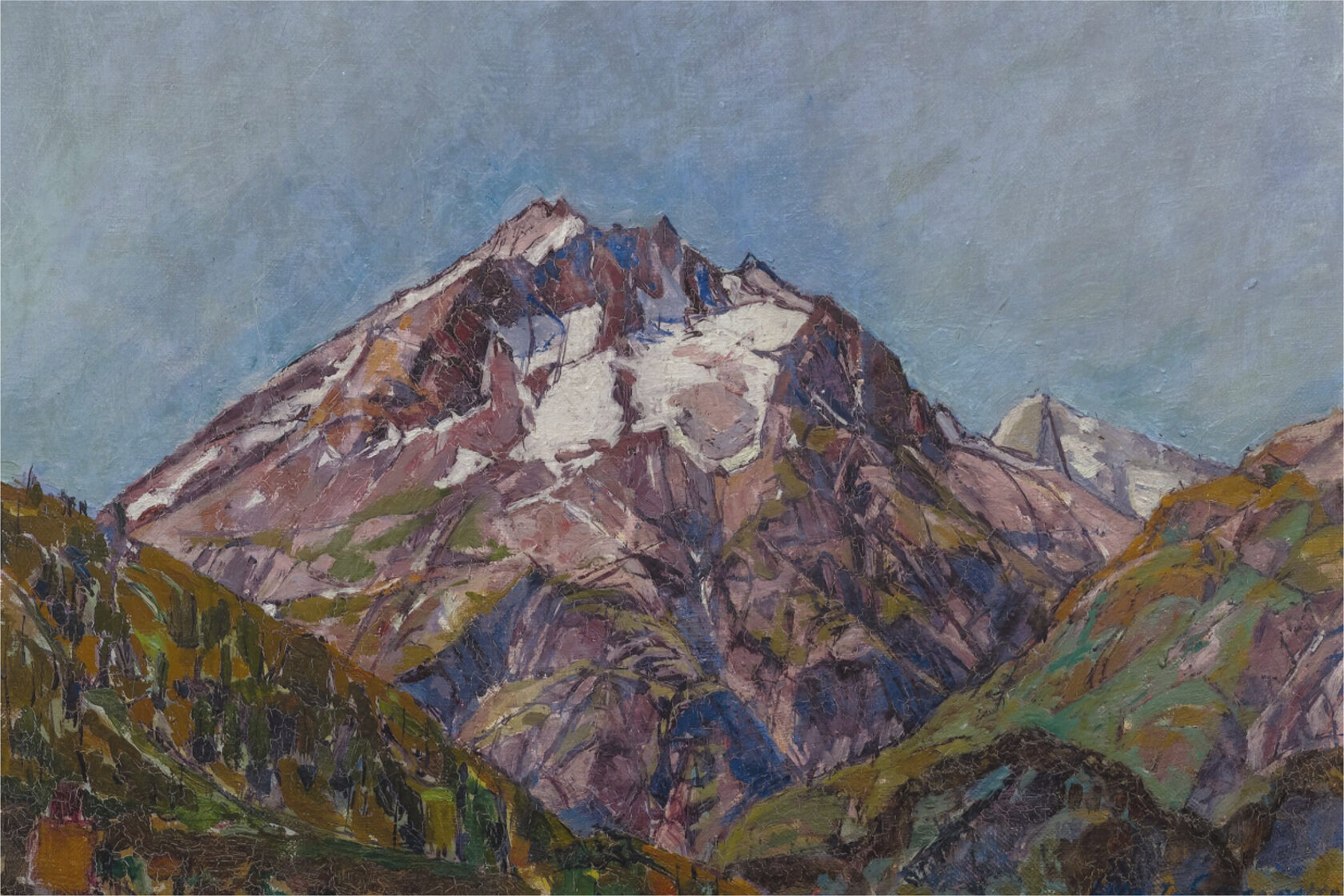
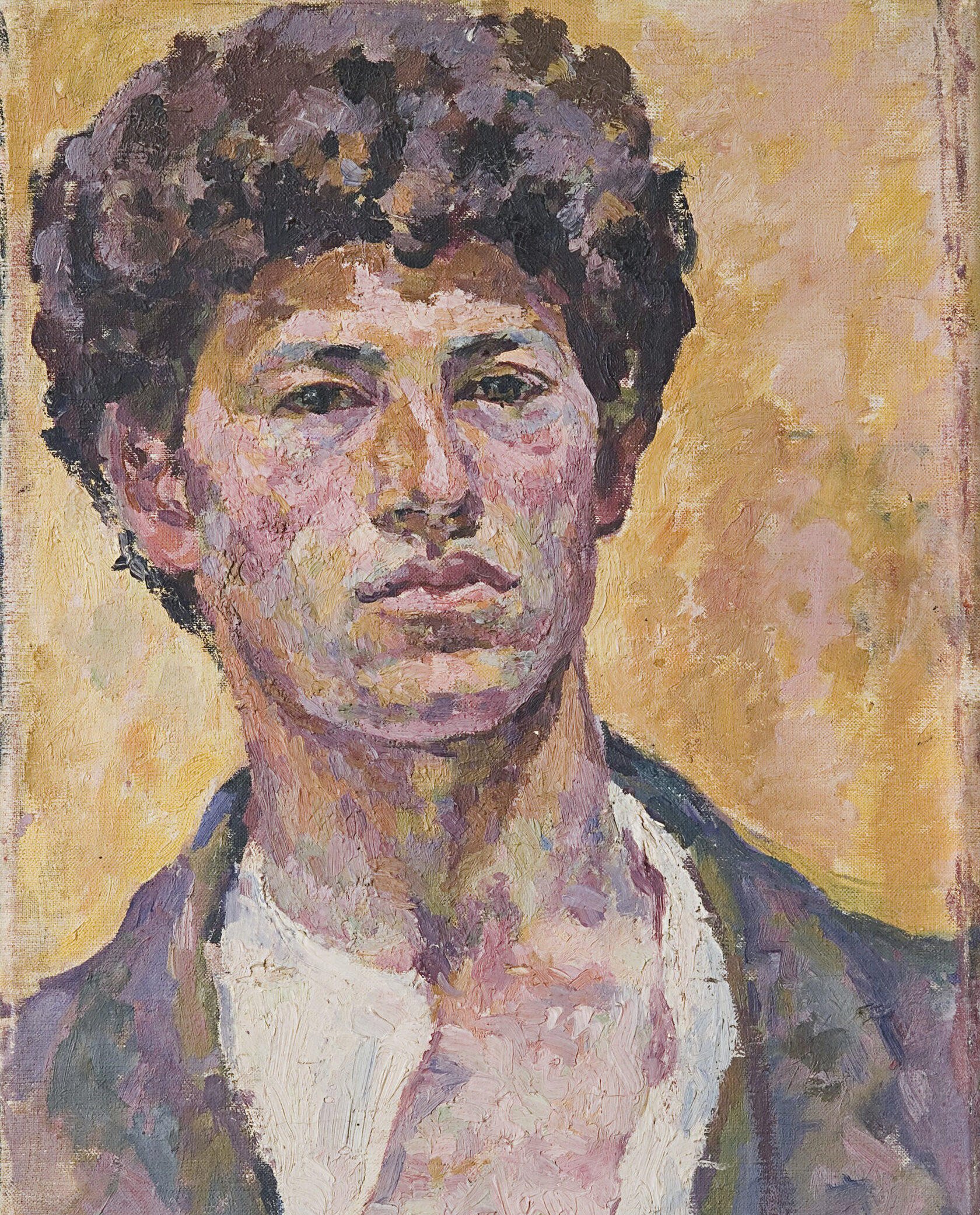
Influenced by his father’s post‑impressionist style, Giacometti gradually developed his own artistic language. This evolution is evident in his 1920 self‑portrait and the 1923 painting Monte del Forno, where he skillfully combined Cézanne’s structural clarity with Hodler’s monumental gestures. However, seeking artistic independence, he left for Paris in 1922, determined to move beyond what he perceived as provincial constraints.
In Paris, immersed in the avant‑garde scene, Giacometti underwent a profound transformation. Initially inspired by Cézanne’s approach to sculpture, he soon faced an inner dilemma: should he remain a painter or embrace sculpture? During the 1920s and 1930s, he explored various styles — from cubism to tribal and archaic art — eventually embracing surrealism. His artistic development led to the creation of those instantly recognizable elongated sculptures, where texture and form became tools for examining the existential dimensions of human experience.
In Paris, immersed in the avant‑garde scene, Giacometti underwent a profound transformation. Initially inspired by Cézanne’s approach to sculpture, he soon faced an inner dilemma: should he remain a painter or embrace sculpture? During the 1920s and 1930s, he explored various styles — from cubism to tribal and archaic art — eventually embracing surrealism. His artistic development led to the creation of those instantly recognizable elongated sculptures, where texture and form became tools for examining the existential dimensions of human experience.
The outbreak of World War II brought Giacometti back to Switzerland, where he lived in Geneva while maintaining his connection to Stampa and Maloja. During this period, he repeatedly portrayed those closest to him: his mother, brother Diego, and wife Annette. Notable works include the bronze sculptures Tête au long cou (1949) and Petite buste de Diego (1954), alongside the delicate drawings of his wife and mother — all reflecting the dialogue between the cosmopolitan Paris and his rooted connection to home.
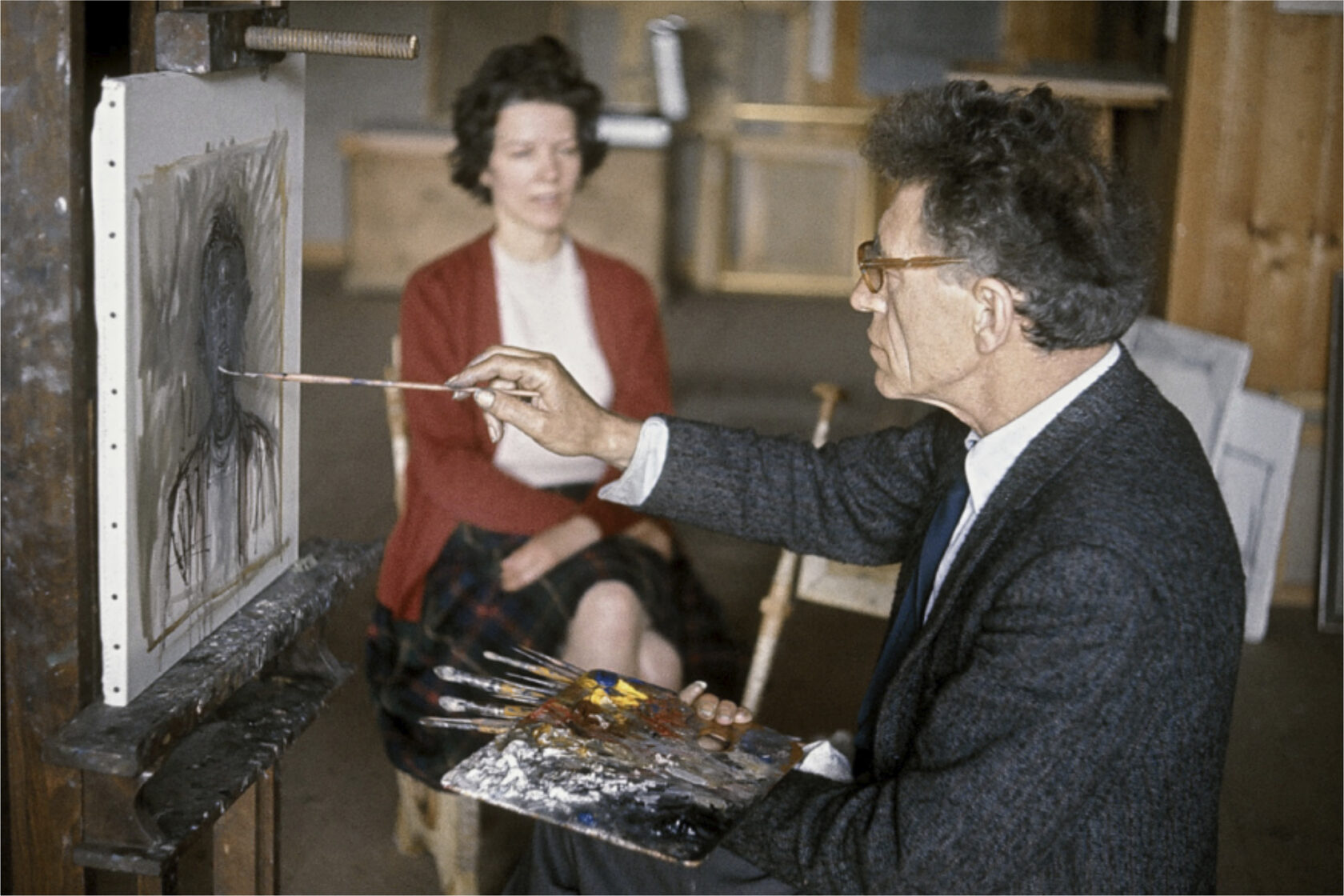
While his Paris studio attracted numerous visitors, Stampa remained his private space for sketching and reflection. In his later years, Giacometti frequently returned to his native landscapes, motivated by his mother’s aging and his own declining health. Returning to these places reignited his creative spark, which found expression in mountain drawings reconnecting with the thematic essence of his roots.
Together, the works and photographs in the exhibition create a visual bridge between Giacometti’s public persona as a Montparnasse modernist and his private identity as a son of the Alps, revealing the intensity and psychological depth that define his unique approach to representation.
You can visit the website to find out more information.
Dates: 13 December 2025 — 28 March 2026
Place: Hauser & Wirth St. Moritz, Via Serlas 22, St. Moritz
Place: Hauser & Wirth St. Moritz, Via Serlas 22, St. Moritz
Contributor: Maria Efimova
Cover photo: Succession, Alberto Giacometti, 2025, ProLitteris, Zurich © Photo: Ernst Scheidegger