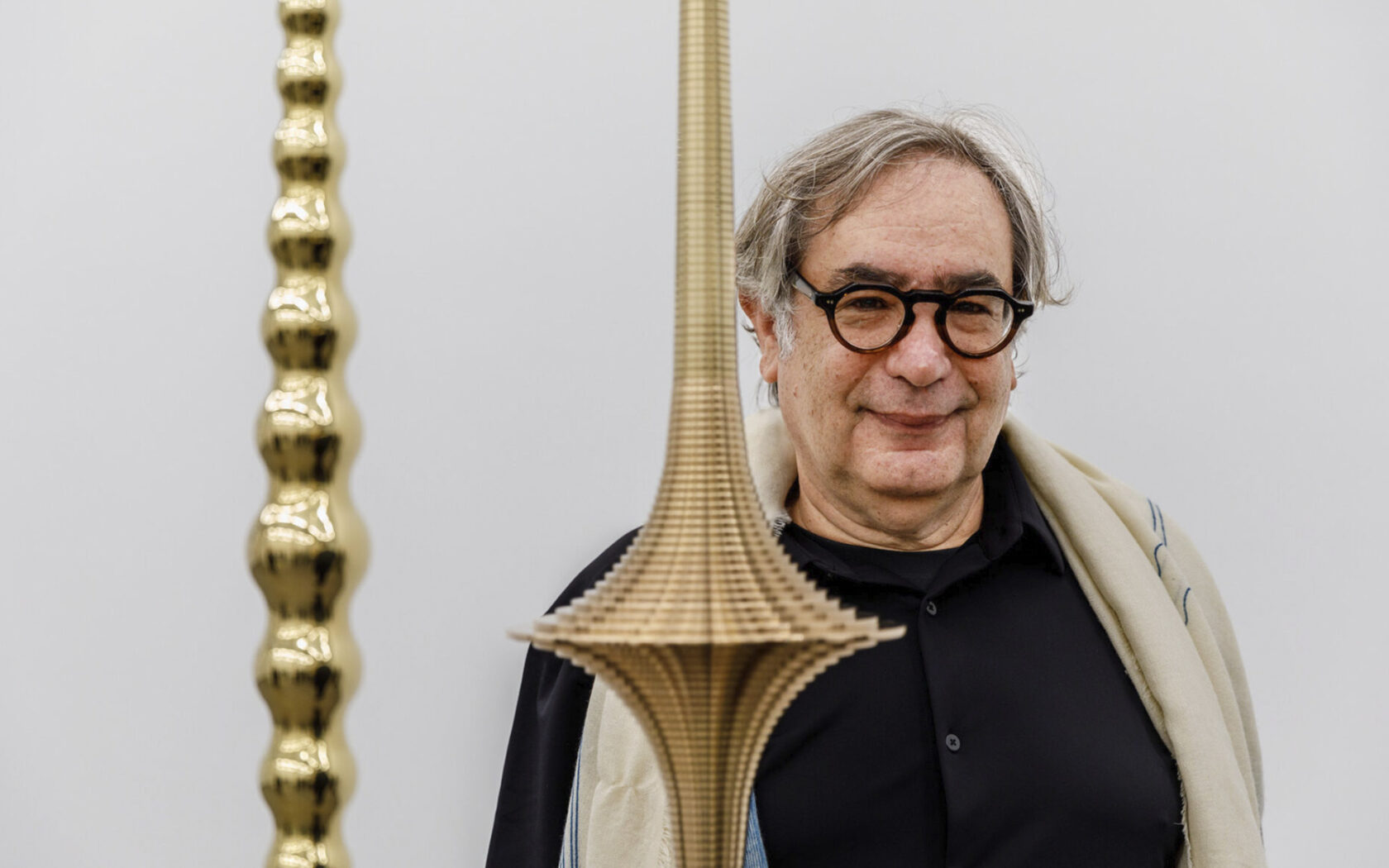
What happens when sculpture transcends its material boundaries to whisper cosmic tales? Brazilian artist Artur Lescher offers an answer in Entangled Fields, his Zurich Art Prize 2025 exhibition at the Museum Haus Konstruktiv. Curated by Sabine Schaschl, this show reveals how objects can become conduits for time, myth, and invisible forces that shape our perception of reality.
Lescher engages in a profound dialogue between matter and meaning at the core of his practice. Since the mid‑1980s, he has explored materials not merely as physical substances but as carriers of cultural memory. Brass, metal, wood, and copper are transformed into vessels of minimalist elegance. Their polished surfaces conceal an inner vitality. Suspended pendulums, resembling slender steles, appear to defy gravity, their gleaming forms evoking constellations. In V Sagittae, Lescher memorializes a binary star destined to explode in 2083, bridging astronomical time with human experience — a reminder that our existence is woven into the fabric of the cosmos.
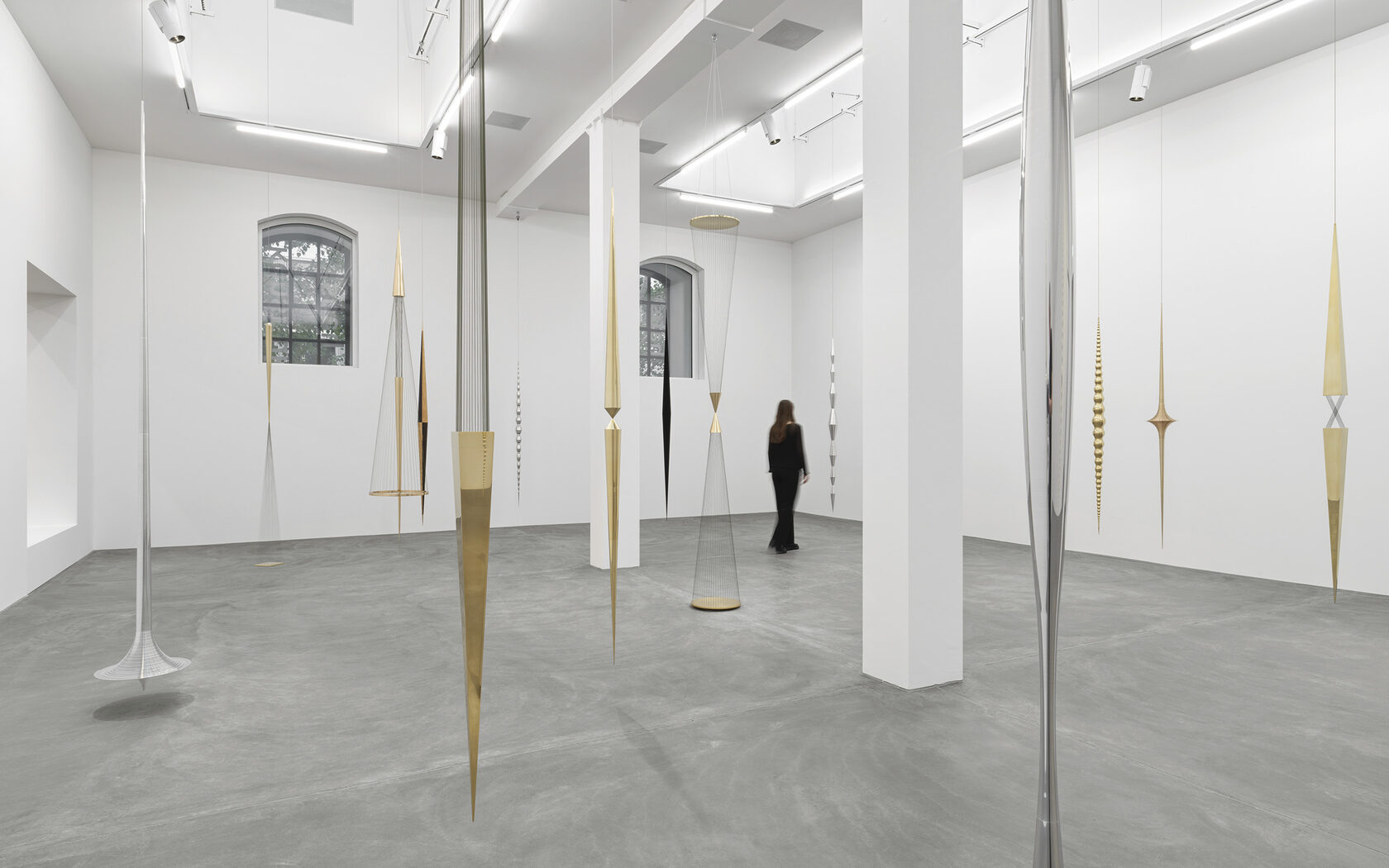
The title Entangled Fields borrows from quantum physics, where particles remain mysteriously connected beyond spatial and temporal limits. Lescher translates this scientific concept into an aesthetic experience: his sculptures don't exist in isolation but form a self-contained universe within the gallery. Together, they create a narrative that transcends pure visual pleasure, inviting viewers into a metaphorical realm. This synthesis of modernity and archaic themes, infused with animistic resonance, sets him apart from the pragmatic rigor of Minimal Art. Where Minimalism champions reduction, Lescher enriches geometric precision with mythological depth: copper becomes the embodiment of Venus’s softness, while iron resonates with Hephaestus’s strength.
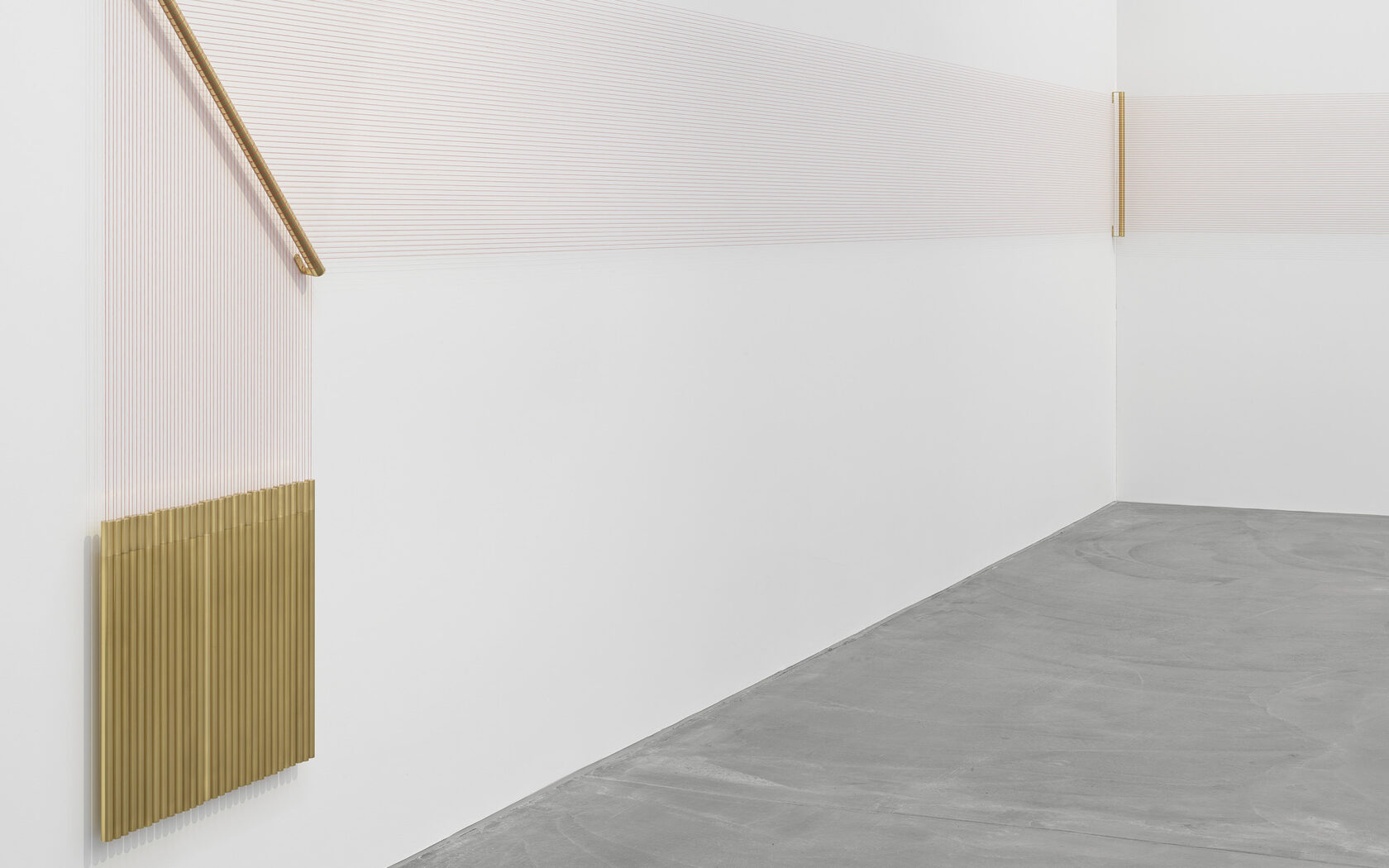
A hallmark of Lescher’s work is his responsiveness to architectural contexts. Between the Lines, created specifically for the Museum Haus Konstruktiv, exemplifies this approach. Red nylon strings trace the walls and the floor, subtly measuring the space while imbuing it with ethereal lightness. This minimal intervention transforms the gallery into a sonic metaphor, evoking string instruments and musical notation. Similarly, Pendulum (1998) — Lescher’s earliest work at the exhibition — bridges historical reflection with the present moment. Its static form paradoxically underscores the “here and now”, reminding us that time is both linear and cyclical.
By guiding visitors through the concurrent Concrete Art / Neoconcretismo exhibition prior to entering the second gallery space, the artist highlights the contextual and historical foundations of his own practice. This sequence brings into focus the web of connections, influences, and art-historical references embedded in the works, including the many possible interpretations of the exhibition’s title: Entangled Fields.
By guiding visitors through the concurrent Concrete Art / Neoconcretismo exhibition prior to entering the second gallery space, the artist highlights the contextual and historical foundations of his own practice. This sequence brings into focus the web of connections, influences, and art-historical references embedded in the works, including the many possible interpretations of the exhibition’s title: Entangled Fields.
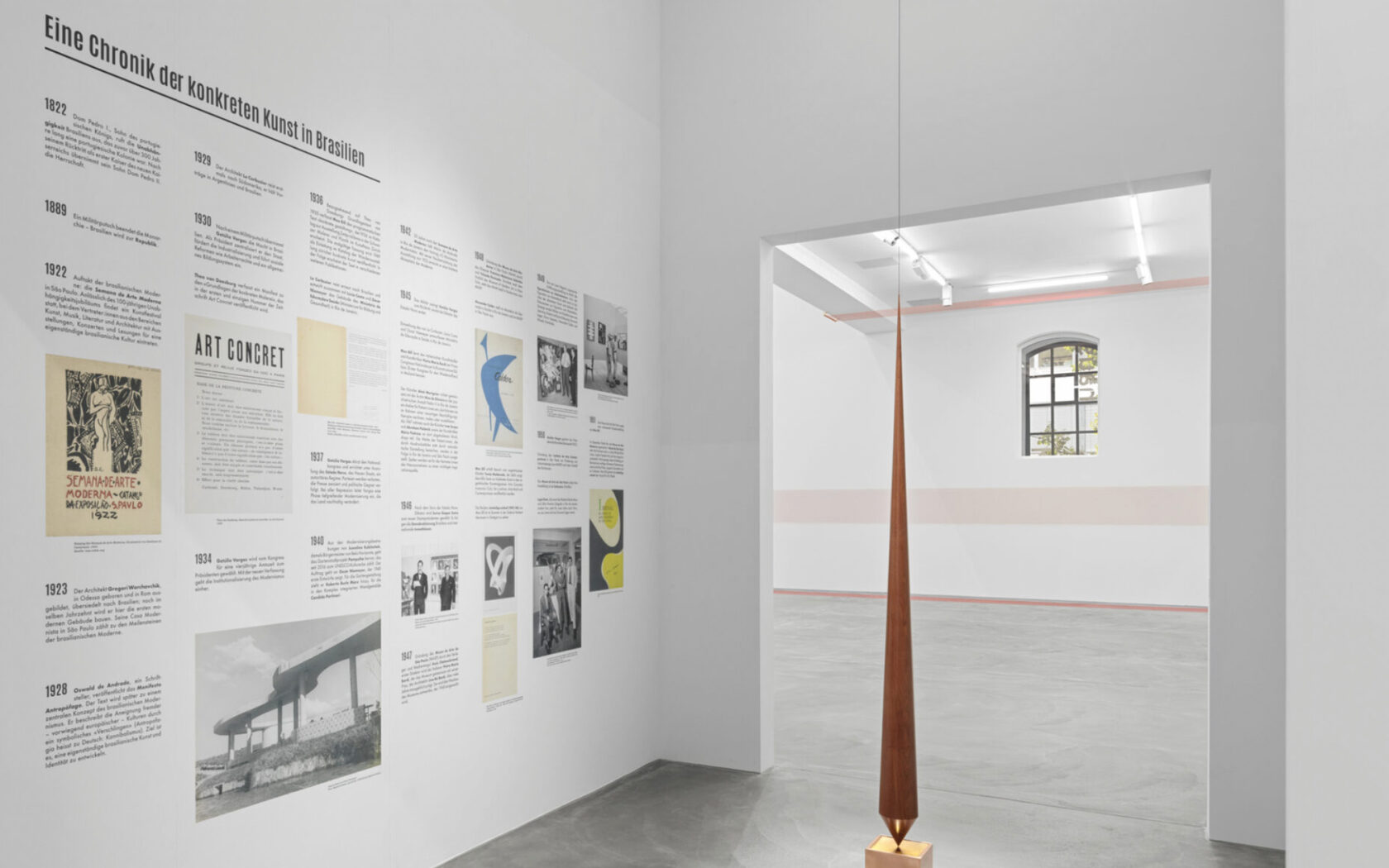
Pendulum (1998), Lescher’s earliest piece in the show, is situated next to A Chronicle of Concrete Art in Brazil, an installation that documents the mutual influences between Brazilian and European concretist movements. The work invokes the notion of time and its progression, as well as historical continuity; yet when still, the pendulum also centers the viewer in the present.
Instead of passively filling space, Lescher’s sculptures dynamically interact with their environment. The exhibition space itself becomes a fundamental component that enhances the sculptures’ expressive power – a trait that earned Lescher the Zurich Art Prize.
The Zurich Art Prize, established in 2007 by Museum Haus Konstruktiv and Zurich Insurance Company Ltd., honors artists who redefine the intersection of contemporary trends and constructive‑concrete heritage.
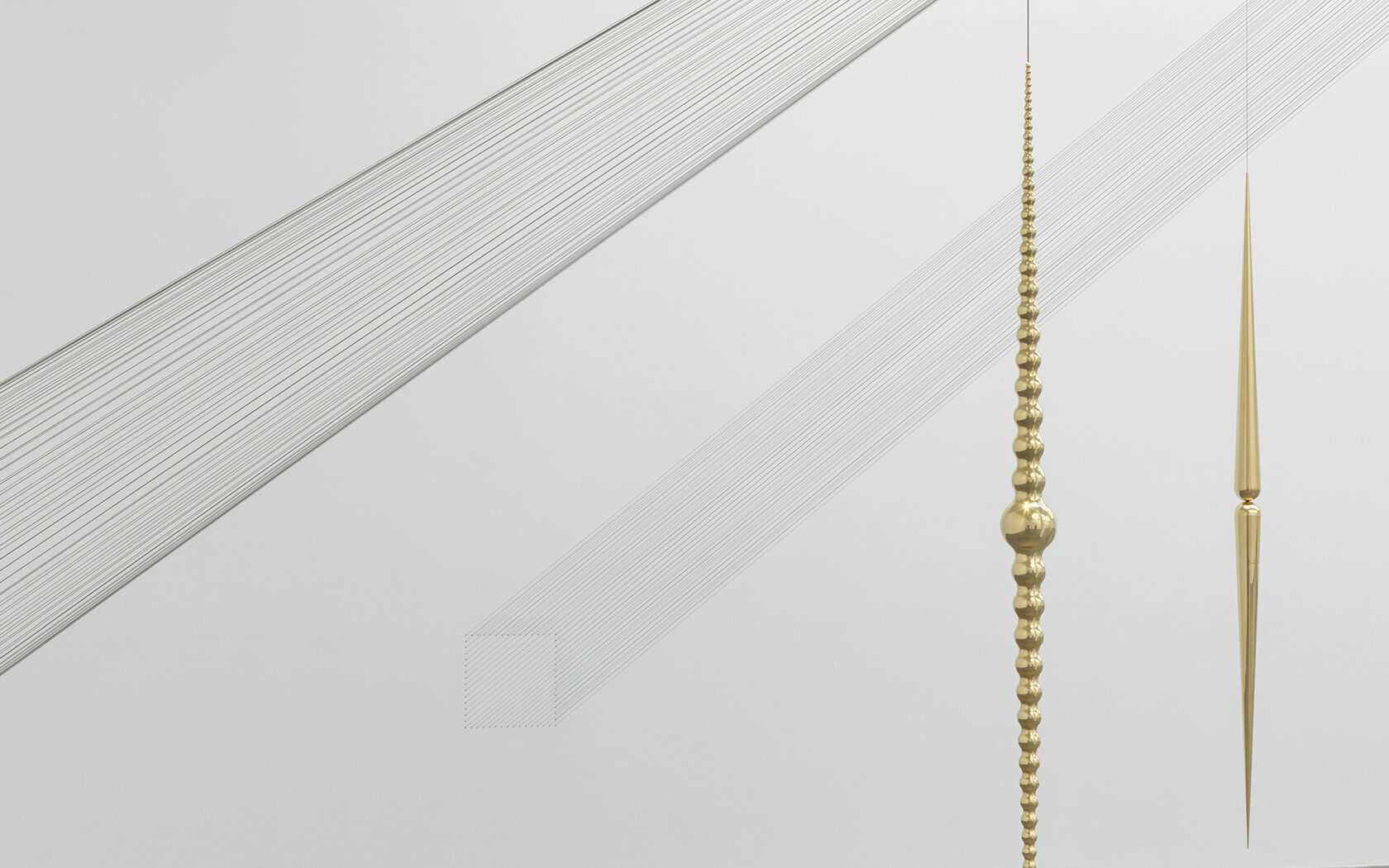
Through Entangled Fields, Lescher invites viewers to experience sculpture not as static objects but as evolving participants in a spatial and cosmic choreography. His ability to merge material inquiry, mythic symbolism, and architectural sensitivity solidifies his position as a pivotal voice in contemporary art, which reminds us that even the most tangible forms can carry intangible truths.
More information you can find by visiting the website.
Dates: 23 October 2025 — 11 January 2026
Place: Zurich’s Museum Haus Konstruktiv, Limmatstrasse 268
Place: Zurich’s Museum Haus Konstruktiv, Limmatstrasse 268
Contributor: Maria Efimova
Cover photo: Artur Lescher, winner of the Zurich Art Prize 2025 © Photo: Bettina Diel. Courtesy of the artist